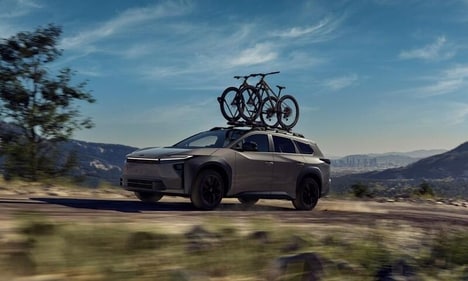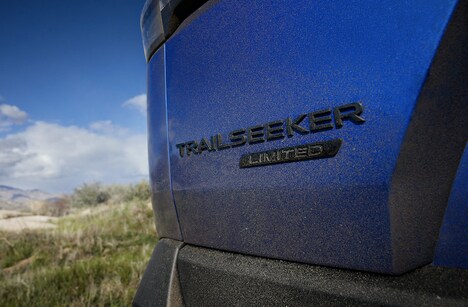
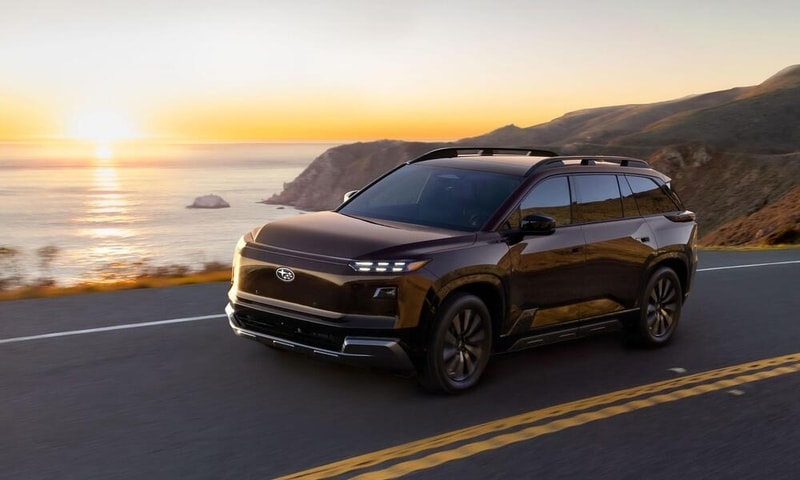
Subaru introduced the Getaway, its first three-row electric SUV, at the 2026 New York International Auto Show, featuring Toyota's e-TNGA platform and Symmetrical all-wheel drive. The launch model offered a 95.8 kWh battery with more than 300 miles of range, a native NACS charging port and an estimated 150 kW peak charging rate designed to reach 10–80% in about 30 minutes.
Interior and capability details included seating for up to seven or optional captain's chairs for six, a 14-inch infotainment touchscreen with wireless Android Auto and Apple CarPlay, and a 12.3-inch digital instrument cluster.
Subaru positioned the Getaway for outdoors-minded families with 8.3 inches of ground clearance, ladder-style roof rails on most trims, towing up to 3,500 lb and standard heated front seats, making it a practical EV option for buyers shifting from combustion SUVs.
Image Credit: Subaru
Why This Trend Is Growing
- Three-row Electric Adoption
- Growing consumer interest in family-sized EVs is shifting vehicle architectures toward larger battery packs and cabin packaging that challenge traditional combustion-based SUV value propositions.
- Platform Sharing Partnerships
- Cross-brand platform collaborations are enabling faster EV rollouts and cost efficiencies that can upend supplier relationships and margin structures across manufacturers.
- Outdoor-focused EV Design
- Integration of off-road capability, higher ground clearance and towing capacity into EVs creates new requirements for thermal management and powertrain durability that could redefine vehicle utility segments.
Industries Being Reshaped
- Automotive Original Equipment Manufacturers
- OEMs face a landscape where electrified three-row models demand rethought manufacturing footprints, supply chain coordination and new service propositions for larger, more complex EVs.
- Charging Infrastructure Providers
- Networks that support higher peak charging rates and NACS compatibility are positioned to disrupt traditional fueling ecosystems by enabling longer-range, fast-recharge family travel.
- Battery and Thermal Management Suppliers
- Suppliers focused on high-capacity cells and robust thermal systems encounter opportunities to transform vehicle range, charging speed and performance under towing or off-road loads.