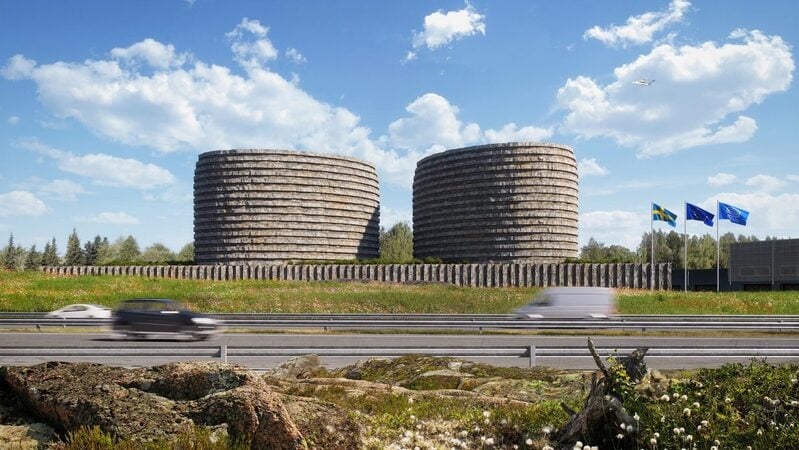
Stone Clouds is a data centre project in Sweden designed by Carl Fredrik Svenstedt Architects that uses load-bearing stone as the primary structural material to redefine data infrastructure aesthetics and sustainability. The facility is organised as a series of massive stone volumes that support mechanical systems while providing thermal mass and durability against climate extremes.
Structural stone panels are assembled into walls and roofs without heavy reliance on steel framing, enabling a reduced carbon footprint compared with conventional industrial buildings. The stone massing also contributes to passive environmental performance by moderating temperature fluctuations within the facility.
The server halls are arranged within the stone shell to benefit from the material’s inherent fire resistance and compressive strength. Mechanical, electrical, and plumbing systems are integrated through apertures and channels carved into the stone framework, balancing functional access with solid enclosure performance.
Image Credit: Luxigon
What Makes This Trend Stand Out
- Massive Stone Data Architecture
- The use of load-bearing stone as primary structure creates opportunities for data centres with greatly reduced embodied carbon and enhanced passive thermal regulation.
- Passive Thermal Mass Cooling
- Embedding server halls within heavy stone shells enables stable internal temperatures that can significantly lower reliance on active cooling systems.
- Integrated Stone-service Channels
- Carved apertures for mechanical, electrical and plumbing integration point to prefabricated stone components that combine structural support and service routing in a single element.
Sectors Adopting This
- Hyperscale Cloud Providers
- Providers operating large-scale computation could leverage stone-structured facilities to achieve long-term operational cost savings through passive climate resilience.
- Green Building Materials
- Manufacturers of engineered stone panels and modular masonry might see new markets for low-carbon load-bearing elements tailored to infrastructure projects.
- Edge Infrastructure
- Distributed edge nodes housed in resilient stone enclosures would offer enhanced physical security and improved thermal stability for critical low-latency equipment.