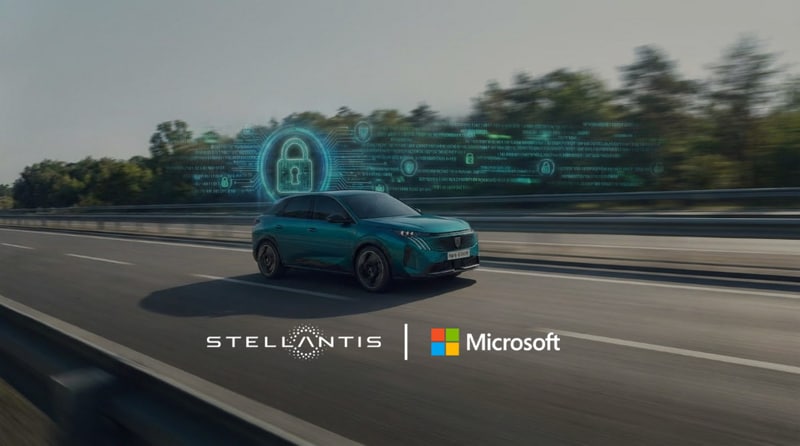
The Stellantis and Microsoft collaboration signals a shift toward embedding AI across entire enterprise ecosystems rather than limiting it to isolated use cases. By co-developing over 100 AI initiatives spanning engineering, customer care, cybersecurity, and operations, the partnership highlights how large organizations are integrating intelligent systems into every layer of their business.
This approach enables faster product development, predictive maintenance, and more personalized in-vehicle experiences, while strengthening cybersecurity across connected systems. For businesses, this model lowers operational inefficiencies and enhances decision-making through real-time data insights. It also sets a precedent for cross-industry partnerships, where cloud providers and manufacturers work closely to scale digital capabilities. As more companies adopt similar strategies, AI is becoming a foundational layer of enterprise infrastructure, reshaping how organizations compete, collaborate, and deliver value to customers globally.
Image Credit: Stellantis.Microsoft
Key Themes Behind This Trend
- Embedded Enterprise AI Ecosystems
- Organizations increasingly treat AI as a pervasive infrastructure layer that unifies engineering, customer care, operations and security to enable cross-functional automation and insight.
- Strategic Cloud-manufacturer Partnerships
- Collaborations between cloud providers and manufacturers are producing integrated stacks that standardize data, tooling and co-developed AI initiatives across supply chains and product lifecycles.
- AI-driven Cyber-operational Convergence
- Security and operational functions are converging around AI systems that correlate telemetry, predict threats and optimize maintenance for real-time resilience across connected assets.
Where This Applies
- Automotive Manufacturing
- The auto sector can reshape product development and ownership models through AI-enabled design iteration, predictive maintenance and deeply personalized in-vehicle experiences.
- Cloud Services and Platform Providers
- Cloud platforms are positioned to redefine enterprise IT by delivering turnkey AI ecosystems with model governance, edge deployment and industry-specific application layers.
- Cybersecurity Solutions
- Security vendors have the opportunity to transition toward predictive, AI-driven defense that fuses operational data and anomaly detection across enterprise-connected devices.