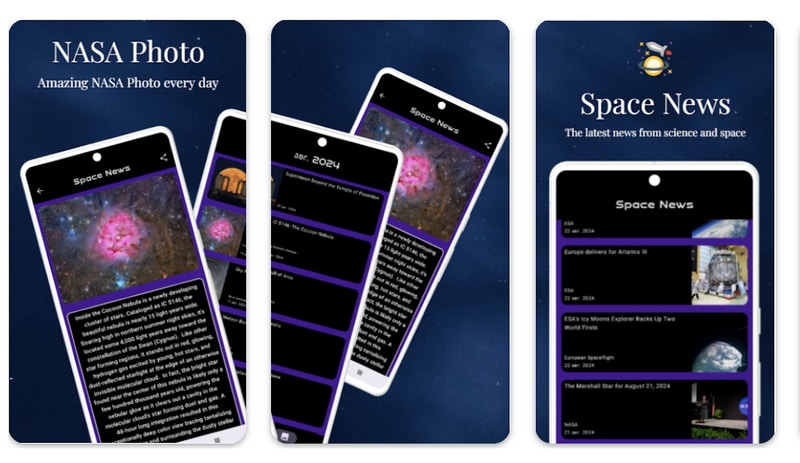
Keeping up with the latest developments in space exploration often means following multiple organizations and news sources -- Space News brings those updates together in a single app, providing coverage of launches, scientific discoveries, and missions from organizations such as NASA, SpaceX, and observatories around the world.
The app covers a broad range of topics, from rocket launches and astronaut missions to black holes, planetary research, and other astronomical discoveries. By gathering these updates into one feed, it offers users a convenient way to stay informed about major events in space science and exploration.
Designed for space enthusiasts, students, and anyone with an interest in astronomy, Space News serves as a central source for following ongoing developments across both government and commercial space programs.
Image Credit: Space News
Why This Trend Is Growing
- Real-time Space Feeds
- Centralized mission updates create room for platforms that translate fragmented space activity into accessible, continuously refreshed intelligence for public and professional audiences.
- Cosmic Discovery Aggregation
- Curated astronomy coverage reflects a growing market for specialized news ecosystems that simplify complex scientific developments across institutions, observatories, and private operators.
- Enthusiast Science Apps
- Mobile-first space education points to opportunities in interactive, interest-based learning tools that connect casual curiosity with credible research and live exploration milestones.
Industries Being Reshaped
- Space Technology
- Commercial and government space programs benefit from media layers that make launches, missions, and discoveries more visible to investors, students, and engaged consumers.
- Digital Publishing
- Niche news aggregation is reshaping publishing models by favoring focused, high-frequency content streams over broad science coverage distributed across multiple outlets.
- Education Technology
- Astronomy-focused apps support new learning formats where real-world missions and discoveries become timely educational content for classrooms, independent learners, and science communities.