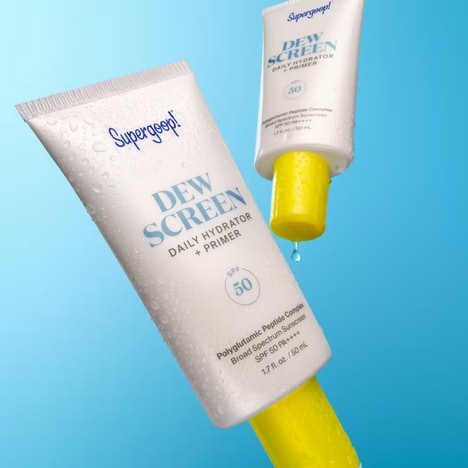
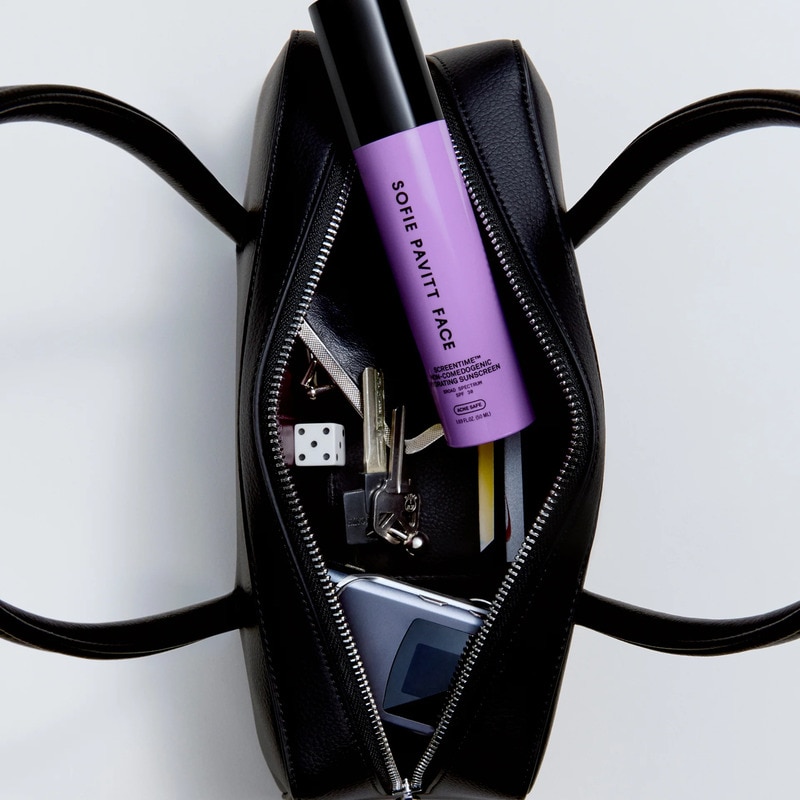
Sofie Pavitt Face Screentime is a new, non-comedogenic, hydrating sunscreen expressly made to suit the needs of consumers with acne-prone skin, effectively combining skincare with sun protection.
For those with acne-prone skin, daily sun care sometimes comes with a heavy, greasy formula that clogs pores, leaves a white cast, or triggers breakouts, which can be so frustrating that many end up skipping sun protection altogether. Screentime provides a different experience as a hydrating, acne-safe sunscreen featuring nourishing ectoin, niacinimide, and Vitamin E, plus UVA and UVB protectors, and a formula that promises a non-greasy, dewy, lightweight finish that won't pill or leave a telltale white trace.
This versatile product, meant to be used as the last step in a skincare routine, stands on its own and works well under makeup.
What's Driving This Trend
- Acne-safe Sun Care
- Formulations that provide UV protection without pore-clogging ingredients create scope for sunscreens tailored to blemish-prone consumers.
- Hydrating Lightweight Formulas
- A movement toward non-greasy, dewy textures that deliver moisture and barrier support opens room for novel emulsions that replace heavy occlusives.
- Skincare-makeup Hybrid
- Products that double as protection and a cosmetic base suggest potential for multipurpose finishes that streamline morning routines.
Who This Affects Most
- Dermocosmetics
- Clinically backed actives like ectoin and niacinamide combined with UV filters indicate opportunities for prescription-adjacent formulations targeting sensitive skin segments.
- Sun Protection Manufacturing
- Demand for broad-spectrum, non-comedogenic sunscreens points toward innovation in UV filter systems and delivery technologies that reduce white cast and greasiness.
- Cosmetic Retail and Sampling
- Consumer reluctance to adopt daily sunscreen because of texture issues highlights possibilities for in-store sampling formats and education that demonstrate real-wear finishes.