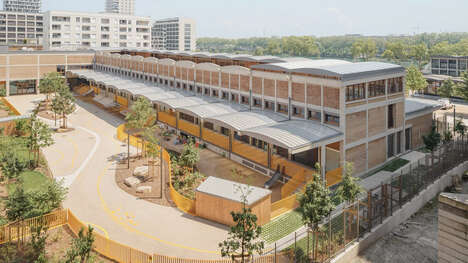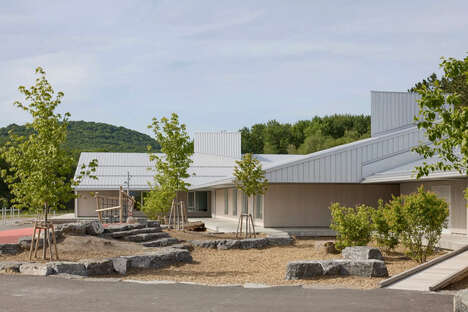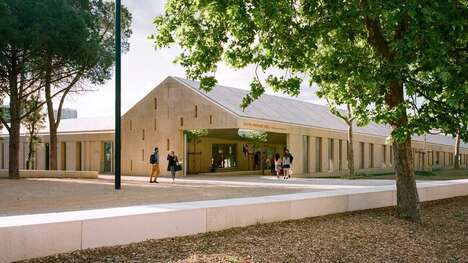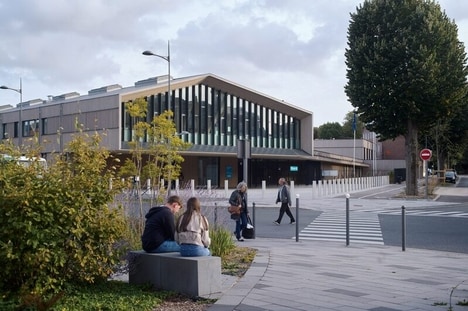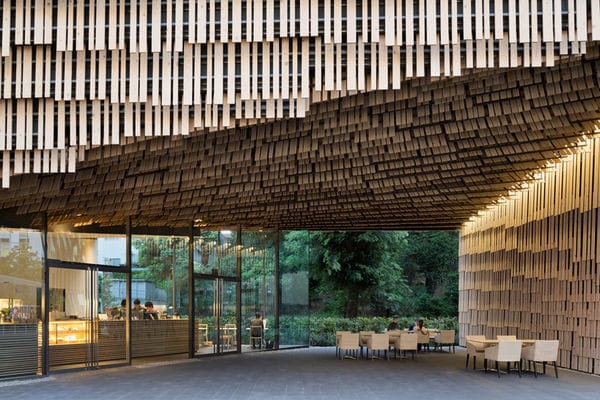
An elementary school in the city of Lille in France has a canteen covered with bricks that evoke snakeskin patterns. Designed by the D'Houndt & Bajart architectural practice, the unique layout of the canteen building seeks to activate children's imaginations and dreams.
The snakeskin patterns form a facade that is at once protective and welcoming, as it isolates the dining space from the street, allowing for a feeling of calm and privacy without an accompanying sense of seclusion or overprotection. The building is even home to a vegetable garden that will be used for educational purposes.
Aside from providing a high level of functionality, the building with its snakeskin patterns stand to become a visible and easily identifiable landmark for the Lille region. For increased aesthetic coherence, the building is designed to occupy a similar size and scale compared to neighboring buildings.
What's Driving This Trend
- Snakeskin-patterned Architecture
- Using snakeskin patterns in building designs to create unique and visually striking structures that activate imagination and promote privacy.
- Integration of Nature in Architecture
- Incorporating vegetable gardens and natural elements into building designs for educational purposes and to promote sustainability.
- Distinctive Landmark Designs
- Creating buildings with unique patterns and aesthetics to serve as easily identifiable landmarks that enhance the character of a region.
Who This Affects Most
- Architecture and Design
- Architects and designers can explore creative ways to incorporate patterns and textures into building designs to create visually striking and functional structures.
- Education
- Educational institutions can consider integrating vegetable gardens and nature-based elements into their buildings to enhance learning experiences and promote sustainability.
- Tourism and Hospitality
- Cities and regions can leverage distinctive and visually appealing buildings as landmarks to attract tourists and enhance the overall tourism experience.