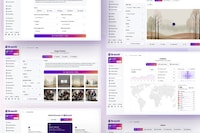
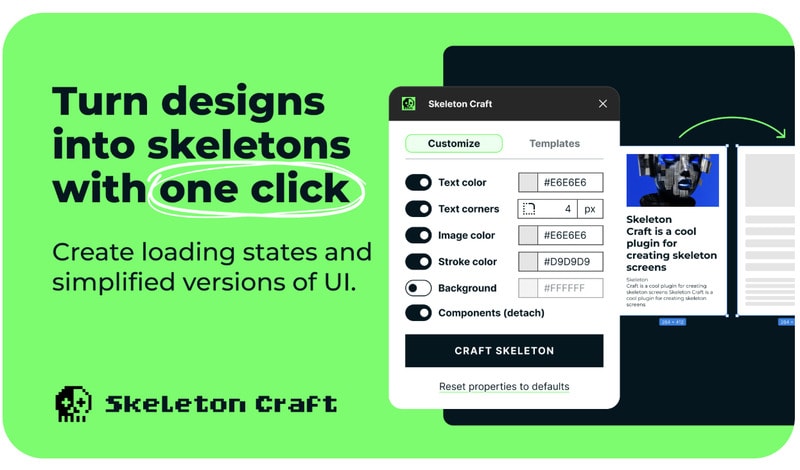
Skeleton Craft is a Figma plugin designed to simplify the creation of skeleton screens and loading states within UI design workflows. It enables designers to convert existing design elements — including text, images, inputs, strokes, and component instances — into simplified placeholder versions with minimal manual effort.
This supports faster prototyping and clearer visualization of loading behavior in digital products. By automating repetitive design tasks, Skeleton Craft helps teams maintain visual consistency while reducing production time. For product teams and businesses, the plugin highlights how design tooling can improve efficiency during early-stage development and handoff to engineering. Its focus on streamlined UI states and minimalistic graphics supports better communication of user experience intent, particularly in performance-sensitive applications where loading feedback plays a critical role in usability and perceived quality.
Image Credit: Skeleton Craft
What's Driving This Trend
- Automated Design Processes
- Increasing automation in design workflows reduces the manual labor required for prototyping and enhances overall design efficiency.
- Streamlined UI Visualization
- The trend towards simplified visualization in UI states supports better communication of user experience and improves clarity during the development process.
- Efficiency in Design Handoff
- Moving towards more efficient design handoff methods improves collaboration between design and engineering, reducing time-to-market for digital products.
Who This Affects Most
- UI/UX Design Software
- The growing demand for tools that enhance user interface and experience design is driving innovation in software that allows for more efficient design processes.
- Digital Product Development
- In the digital product sector, there is an increasing need for tools that facilitate rapid prototyping and improve the speed of product iteration cycles.
- Performance Optimization Technology
- There is room for disruptive innovation in performance optimization technology, particularly tools that enhance user experience through efficient and clear loading animations.