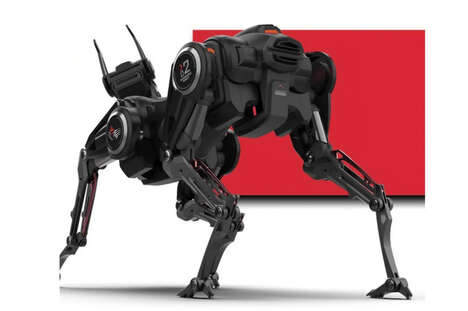
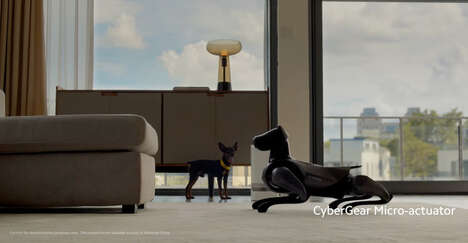
Instead of seeing-eye dogs, the blind could be using the robotic guide dog in the near future.
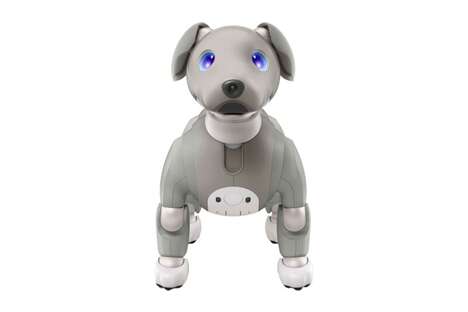
Japanese manufacturer NSK has been developing the robotic guide dog for a few years with the first prototype unveiled in 2005 and the second 2008. This year, they've revealed a third prototype with a few improvements to previous models. The robot takes the four-legged form, so in a way it's like having a seeing-eye dog. The team at NSK have redesigned the legs to move quicker up and down the stairs and they've incorporated voice recognition for command purposes. There's also a longer leash and each foot has a bumper sensor integrated to avoid running into obstacles.
NSK's project certainly has potential to replace guide dogs. It'll be interesting to see how the company will make this available on a worldwide basis.
What's Driving This Trend
- Robotic Guide Dogs
- Disruptive innovation opportunity: Developing advanced robotic guide dogs that can assist the blind with improved mobility and obstacle detection.
- Voice-activated Command Technology
- Disruptive innovation opportunity: Implementing voice recognition in robotic devices to enhance usability and enable intuitive command capabilities.
- Obstacle Avoidance Sensors
- Disruptive innovation opportunity: Creating innovative sensors that can detect and navigate around obstacles to improve the mobility and safety of robotic devices.
Who This Affects Most
- Assistive Technology
- Disruptive innovation opportunity: Expanding the use of advanced robotics in assistive technology to empower individuals with disabilities and improve their quality of life.
- Robotics and AI
- Disruptive innovation opportunity: Integrating robotics and artificial intelligence to develop sophisticated robotic systems capable of assisting in various real-world scenarios.
- Disability Services
- Disruptive innovation opportunity: Enhancing disability services by leveraging advanced technologies like robotics to create innovative solutions that address mobility and independence challenges for individuals with disabilities.