
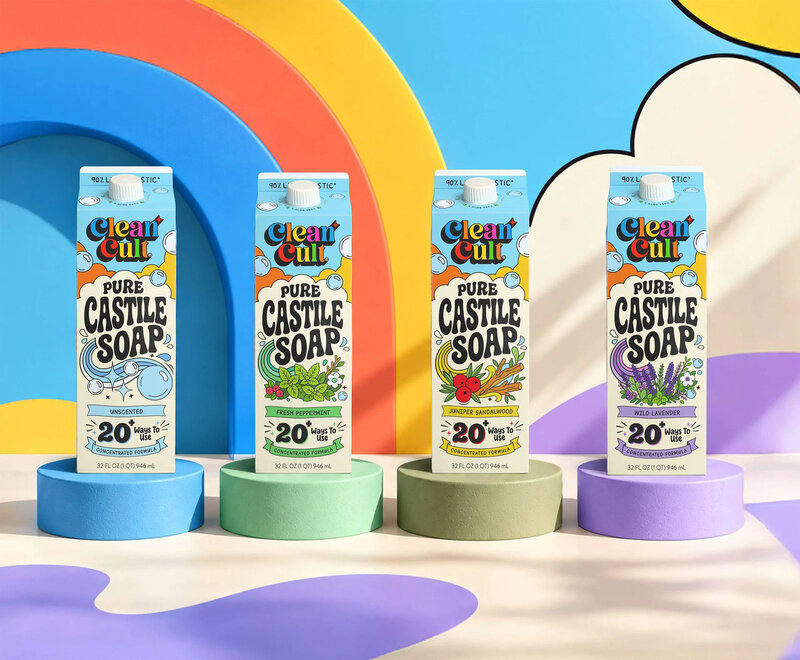
Clean Cult is moving into castile soap through four concentrated formulas, giving castile soap buyers a new option within the brand's household cleaning range. The move takes Clean Cult into a soap style long linked with natural-product buyers.
Its packaging steps away from the brand's usual look with brighter colors and a 1970s-inspired graphic treatment. That helps the cartons stand out on the shelf and separates this line from the rest of Clean Cult's existing range without changing the familiar soap format.
Four concentrated formulas place Clean Cult in a segment closely tied to Dr. Bronner's while giving castile soap buyers more visual and brand choice. The retro cartons widen the category beyond its usual crunchy, text-heavy cues and make room for a more design-led take on a classic formula.
Image Credit: DIELINE
Key Themes Behind This Trend
- Retro Natural Packaging
- Vintage-inspired graphics create shelf disruption in natural cleaning by replacing familiar minimalist or text-heavy cues with bolder, design-led brand signals.
- Concentrated Soap Formats
- Concentrated formulas support lower-waste household care models while giving brands room to differentiate through scent systems, dilution rituals, and refill-compatible packaging.
- Heritage Formula Reinvention
- Classic product formats such as castile soap are being refreshed through contemporary branding, creating opportunities to attract younger shoppers without abandoning trusted natural-cleaning associations.
Where This Applies
- Household Cleaning
- Design-forward natural cleaners can reshape category expectations by pairing familiar efficacy claims with packaging that feels more lifestyle-oriented than utilitarian.
- Personal Care
- Multi-use soap products blur boundaries between body care and home care, opening space for versatile formulations that appeal to simplicity-focused consumers.
- Sustainable Packaging
- Carton-based and concentrated product systems strengthen the case for packaging innovation that reduces material use while improving visual differentiation on retail shelves.