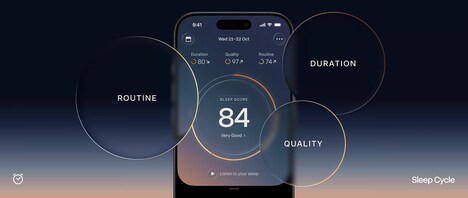
Sleep Cycle has initiated a five-year research collaboration with the Delphi Group at Carnegie Mellon University to investigate whether privacy-preserved sleep data — specifically nighttime cough and breathing patterns collected through the company's Cough Radar tool — can complement traditional respiratory disease surveillance systems and enable earlier detection of seasonal and emerging outbreaks of viruses such as influenza, RSV, and SARS-CoV-2.
The rigorous academic partnership with Carnegie Mellon's Delphi Group, which has been designated a National Center of Excellence for Flu Forecasting by the CDC, provides credibility that Sleep Cycle's service offerings are legitimate and scientifically valid.
Ultimately, this research collaboration can represent a shift from reactive to predictive health, where the data you generate while sleeping could help protect not just your own health but the health of the community.
Image Credit: Sleep Cycle x Delphi Group
What Makes This Trend Stand Out
- Privacy-preserved Passive Sensing
- The integration of anonymized, overnight biometric streams into large datasets can enable population-level insights without compromising individual identities, opening pathways for new data marketplaces and federated analytics models.
- Sleep-based Epidemiological Surveillance
- Nighttime cough and respiratory pattern signals collected at scale have the potential to serve as early indicators for seasonal and emerging respiratory outbreaks, shifting surveillance from clinic-centered reporting to ambient health monitoring.
- Predictive Community Health
- Aggregated sleep-derived metrics could be used to forecast community-level disease trends ahead of traditional diagnostic systems, creating opportunities for anticipatory resource allocation and targeted public health responses.
Sectors Adopting This
- Public Health Surveillance
- Health agencies may evolve to incorporate passive sensor feeds, enabling finer-grained, real-time situational awareness that complements laboratory and clinical reporting networks.
- Consumer Health Technology
- Sleep-focused apps and services that validate clinical-grade sensing could blur lines between wellness products and medical devices, fostering new regulatory pathways and reimbursement models.
- Wearable and Iot Device Manufacturing
- Manufacturers of bedside sensors and connected devices stand to redefine product value propositions by embedding validated respiratory monitoring capabilities and privacy-first data handling into hardware offerings.