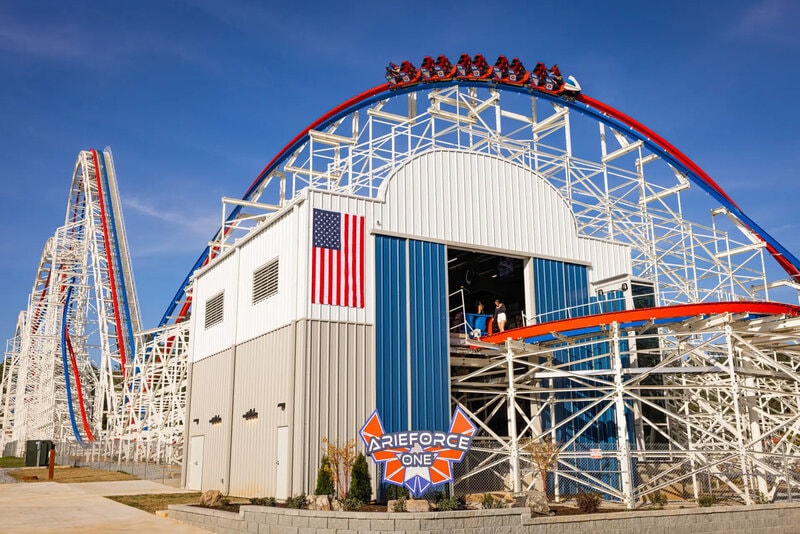
Relocated roller coaster attractions are offering theme parks a way to preserve popular rides while introducing them to new audiences. Six Flags has acquired ArieForce One, a celebrated roller coaster formerly located at Fun Spot America Atlanta, with plans to reopen it at an undisclosed Six Flags park in 2028 or 2029.
Originally launched in 2023, the Rocky Mountain Construction coaster gained recognition for its intense pacing, weightless sensations, and thrilling ride experience. Six Flags intends to maintain the ArieForce One name, preserving its connection to the Arie family while preparing the attraction for another location.
For Six Flags, the relocation presents an opportunity to attract roller coaster enthusiasts and generate interest in the receiving park. Preserving an established attraction also allows the company to build on its existing reputation, potentially encouraging future visits from thrill-seekers eager to experience its return.
Image Credit: Six Flags
What Makes This Trend Stand Out
- Relocated Thrill Assets
- Theme parks can extend the commercial life of proven attractions by moving high-performing rides into markets where novelty and existing fan recognition overlap.
- Portable Brand Equity
- Established ride names and backstories carry audience familiarity across locations, creating new value from intellectual and emotional associations beyond the original park.
- Enthusiast-led Destination Demand
- Roller coaster fan communities create measurable tourism interest around rare ride experiences, making relocated attractions a catalyst for visitation spikes and social buzz.
Sectors Adopting This
- Theme Parks
- Operators are reshaping capital strategies by redeploying recognizable attractions instead of relying solely on ground-up ride development.
- Amusement Manufacturing
- Ride designers and engineering firms gain new relevance as refurbishment, transport, and reinstallation become more central to attraction lifecycles.
- Travel and Tourism
- Regional destinations benefit when iconic rides reappear in new locations, turning attraction relocations into themed travel motivations for niche audiences.