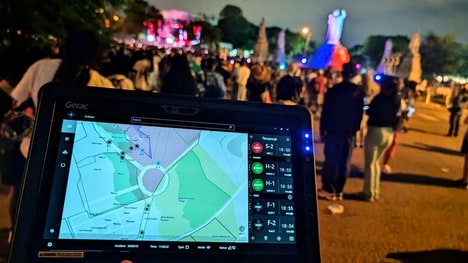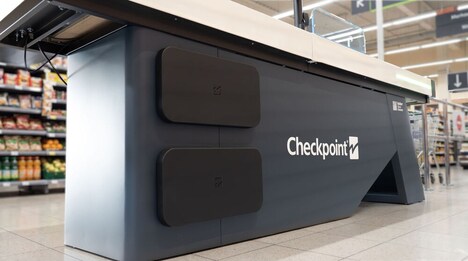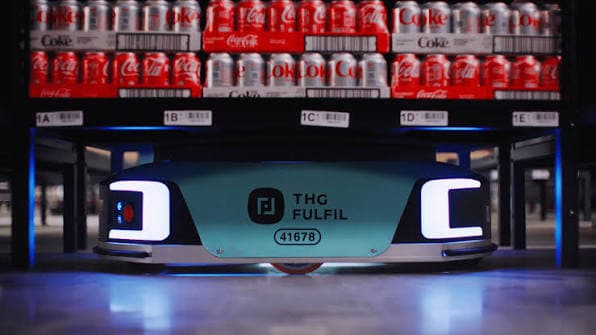
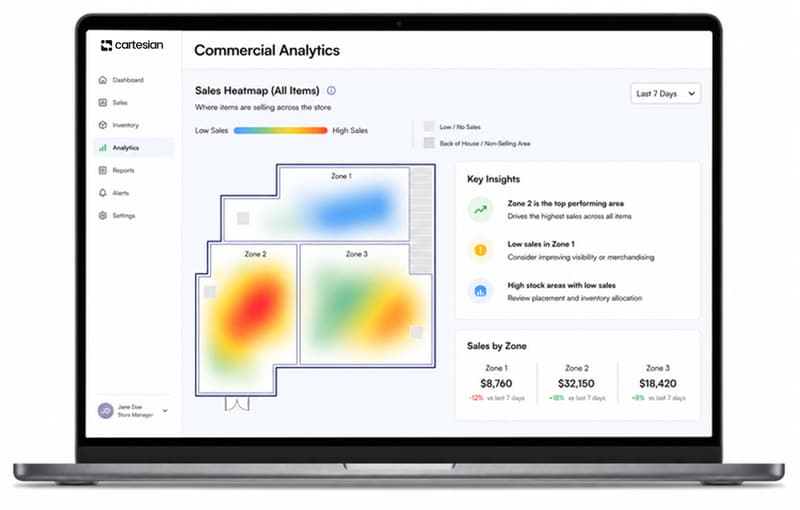
Cartesian provides a real-time store-tracking platform that helps retailers locate tagged items across stockrooms and shop floors, featuring machine-learning algorithms developed through MIT research and powered by standard RFID scans. The company was founded by MIT associate professor Fadel Adib and alumnus Isaac Perper, who commercialized the technology through licensed patents and support from the National Science Foundation.
The platform integrates with existing handheld RFID readers and inventory applications, processing scan data in the cloud to generate item-location maps and inventory intelligence. Cartesian’s technology can also operate using Wi-Fi and Bluetooth signals, expanding its potential applications beyond retail. Following its first major commercial contract in 2025, the company scaled rapidly and is now deployed in more than 700 stores across 15 countries.
For retailers, the platform helps reduce the time employees spend searching for inventory, improving order fulfillment, stock management and customer service. The technology also supports new location-based services and analytics, highlighting a broader move toward spatial AI systems that enable digital intelligence to better understand and interact with physical environments.
Image Credit: Cartesian
Key Themes Behind This Trend
- Spatial Inventory Intelligence
- Real-time item-location mapping is turning routine RFID scans into predictive store visibility, creating openings for software that links physical inventory movement with automated replenishment and fulfillment decisions.
- Rfid-powered Store Automation
- Cloud-based interpretation of handheld RFID data is reducing dependence on manual search processes, signaling potential for leaner retail operations built around continuous location awareness.
- Signal-based Asset Mapping
- The use of RFID, Wi-Fi and Bluetooth signals for location intelligence broadens spatial AI beyond retail, supporting new analytics models for tracking assets across complex indoor environments.
Where This Applies
- Retail Technology
- Store platforms that translate existing inventory scans into live location maps are reshaping omnichannel fulfillment, with value emerging from faster stock discovery and improved customer-facing service.
- Supply Chain Management
- Item-level visibility across stockrooms, sales floors and fulfillment nodes introduces more precise inventory intelligence, allowing supply networks to respond with greater accuracy to demand shifts.
- Indoor Location Services
- Spatial systems capable of interpreting radio signals are expanding the market for indoor mapping, analytics and context-aware services across commercial buildings, logistics hubs and connected workplaces.