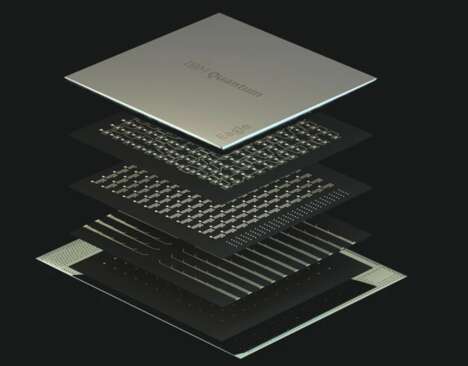
GPS technology is incredibly prevalent in modern life, but scientists from the Imperial College of London and M Squared are hoping to replace this technology with a quantum compass. This new technology essentially provides navigation without the use of conventional GPS gadgets or the use of other satellite technology. In terms of operation, the quantum compass utilizes lasers to cool atoms to extremely low temperatures and then measures the quantum wave properties of the atoms to respond to movement and acceleration to determine location.
This process offers an extremely sensitive device that is significantly more reliable when compared with GPS accelerometers. This technology can also function without the use of satellites, meaning it could be employed in various environments that generally do not have satellite connections.
Image Credit: Imperial College of London/M Squared
Key Themes Behind This Trend
- Quantum Compass Technology
- The development of quantum compass technology offers a more accurate and reliable alternative to GPS navigation.
- Laser-cooling Technology
- The use of lasers to cool atoms to extremely low temperatures opens up possibilities for advanced scientific research and applications.
- Satellite-free Navigation
- The ability of quantum compasses to function without satellite connections enables navigation in environments where GPS is usually inaccessible.
Where This Applies
- Navigation and Mapping
- The navigation and mapping industry can benefit from incorporating quantum compass technology to enhance accuracy and reliability in location tracking.
- Scientific Research
- The advanced laser-cooling technology used in quantum compasses can revolutionize scientific research in fields like quantum mechanics and atomic physics.
- Defense and Military
- The satellite-free navigation capabilities of quantum compasses can be harnessed by defense and military industries for strategic and secure operations in remote or GPS-denied areas.