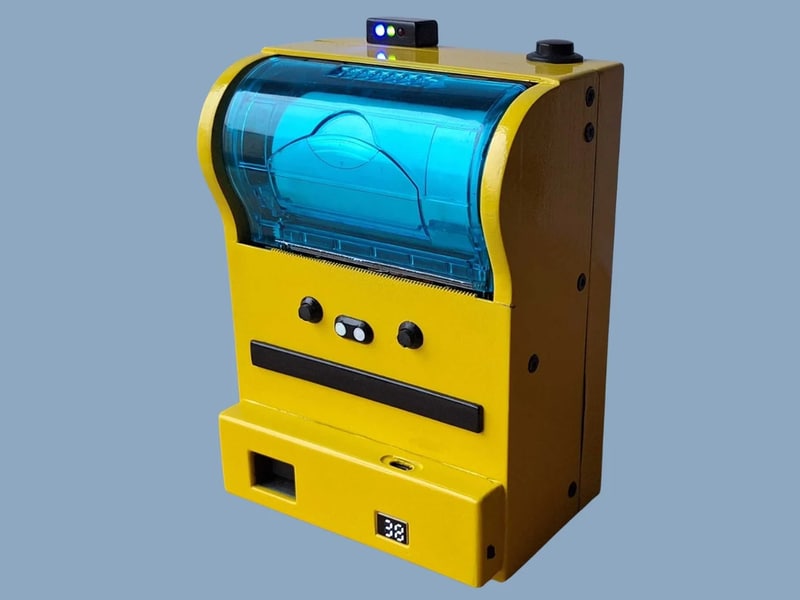
The Poor Man’s Polaroid is a DIY instant camera project created by maker Boxart that replaces traditional instant film with thermal receipt paper. The Poor Man’s Polaroid uses a Raspberry Pi Zero paired with a small camera module and a thermal receipt printer housed inside a 3D-printed body. When the shutter button is pressed, the camera captures an image and immediately prints a small grayscale photo onto curling receipt paper without requiring film cartridges.
The device runs on the internal components of a power bank and uses Python-based software to process and print each photo. Because thermal paper is inexpensive compared to instant film, each print costs less than a cent, while typical Polaroid photos can cost roughly a euro per image. The result is a low-resolution black-and-white picture that resembles a fax print.
Image Credit: Boxart
Why This Trend Is Growing
- Affordable Diy Instant Imaging
- Ultra-low-cost analog-style prints become feasible using commodity thermal media, challenging traditional instant film economics.
- Thermal Print Photography
- Thermal-print processes adapted for photographic output create new forms of portable, single-tone imagery with minimal consumable cost.
- Open-source Raspberry-pi Imaging
- Modular, Raspberry Pi–based camera systems lower barriers to custom imaging hardware and enable rapid iteration of novel form factors.
Industries Being Reshaped
- Consumer Photography
- Inexpensive thermal prints shift consumer expectations toward lower-cost, collectible physical photos and alternative aesthetic formats.
- Retail and Event Merchandising
- Instant, low-cost photo souvenirs present opportunities for automated on-site personalization and impulse purchase offerings at high-traffic venues.
- Education and Maker Spaces
- Affordable DIY camera kits serve as practical learning platforms for hands-on instruction in electronics, coding, and product design.