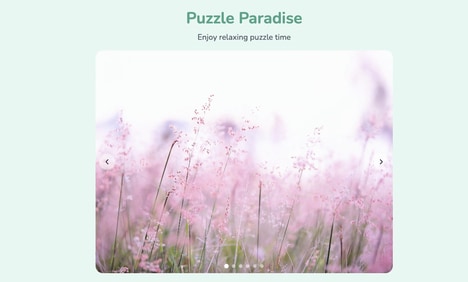
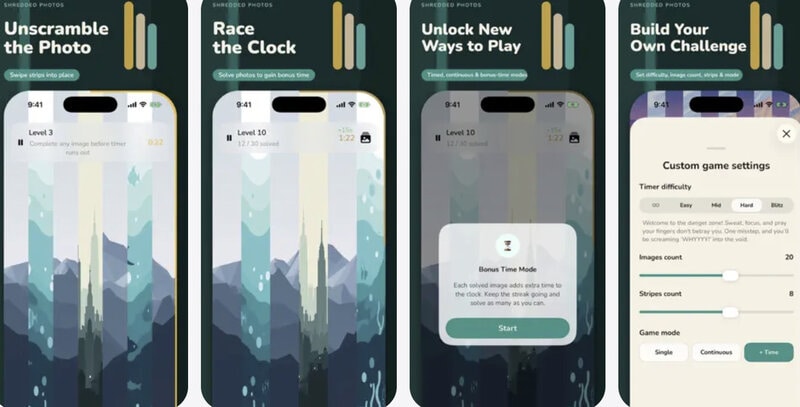
Traditional jigsaw puzzles can be relaxing, but moving and positioning individual pieces can sometimes feel repetitive. PixPuzz offers a different take on the classic puzzle format by replacing traditional pieces with photo strips that players swipe back into the correct position. The swipe-based mechanics are designed to make the game intuitive and easy to pick up, while still providing a satisfying challenge as players work to reconstruct each image.
PixPuzz features an unlimited number of images, giving players plenty of puzzles to explore without running out of new challenges. The game combines a simple control system with visually engaging photography, creating an experience that is intended to feel both relaxing and rewarding. Its slower, more meditative gameplay makes it suitable for casual players looking for something calming to do while still engaging their problem-solving skills. By rethinking how players interact with puzzle pieces, PixPuzz gives the familiar jigsaw format a more modern mobile experience.
Image Credit: PixPuzz
What's Driving This Trend
- Swipe-based Puzzles
- Gesture-first mechanics are reshaping classic puzzle formats into more intuitive mobile experiences that reduce friction while preserving cognitive challenge.
- Meditative Mobile Gaming
- Calming gameplay loops with gentle problem-solving elements create space for digital entertainment positioned around relaxation, focus, and low-pressure engagement.
- Infinite Photo Content
- Expansive image libraries enable casual games to sustain long-term replay value through continuously refreshed visual variety and personalized discovery.
Who This Affects Most
- Mobile Gaming
- Casual game studios can differentiate familiar formats by redesigning interaction models around native smartphone behaviors such as swiping and tapping.
- Digital Wellness
- Relaxation-oriented puzzle experiences bridge entertainment and mental downtime, opening new territory for screen-based products associated with stress reduction.
- Photography Platforms
- Visual content ecosystems gain added utility when images become interactive game assets that extend engagement beyond passive viewing.