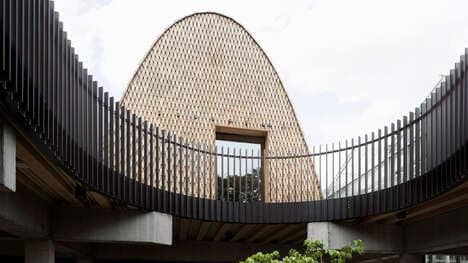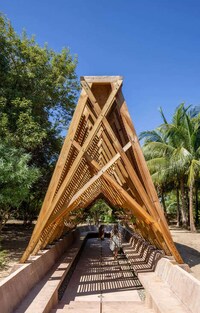
The new pavilion design for the National Arboretum in Canberra, Austria by Australian firm Tonkin Zulaikha Greer Architects is an architectural masterpiece.
The pavilion design has a very distinct spiked roof, which adds a dramatic dimension to the structure -- the roofline was also designed this way to provide a focal point to the building. With a curving balcony as part of the design, the new structure provides stunning panoramic views of the surrounding hillside, city and lake.
"The architecture develops the long-standing tradition of significant garden buildings as transparent enclosures with dramatic internal volumes and sense of indoor-outdoor connection," says the architects behind the project.
The zinc-clad roof was inspired by the structure of leaves and to complement the forms of the natural topography. "[The pavilion's] roof shape is a defined contrast to the rolling topography of the site," say the architects.
Key Themes Behind This Trend
- Spiked-roof Architecture
- The trend towards dramatic and visually striking architecture in public spaces is creating opportunities for innovative designs with unique rooflines.
- Panoramic Views in Architecture
- There is a growing trend towards incorporating elements in the design of buildings that provide stunning views of their surroundings as part of the visitor experience.
- Sustainable Garden Buildings
- The use of architectural design, materials and technology to create buildings that blend seamlessly with the natural landscape and leave minimal environmental impact is becoming more popular.
Where This Applies
- Architecture and Design
- The architecture and design industry has the opportunity to create visually dynamic and sustainable structures that complement their surroundings and enhance the visitor experience.
- Tourism and Hospitality
- Tourism and hospitality companies can create experiential spaces that offer unique views and experiences, enhancing the visitor destination and driving customer engagement.
- Construction and Building Materials
- The use of innovative construction and building materials is critical for creating sustainable and visually appealing garden buildings without compromising their functionality or structural integrity.