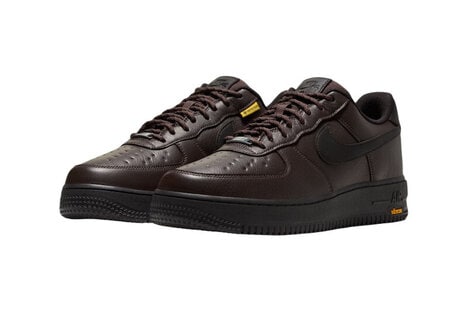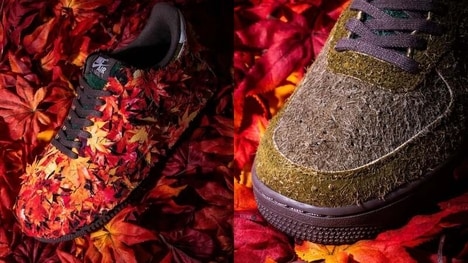
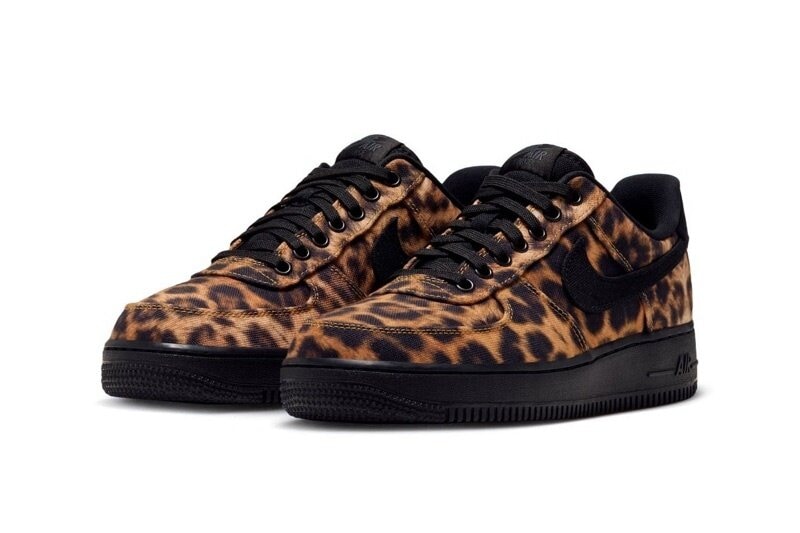
Nike’s Air Force 1 Low “Leopard” is a fall 2026 sneaker that covers the classic low-top in printed leopard-patterned canvas. Bucktan and Desert Ochre tones form the base for irregular black spots, while subtle yellow stitching follows the panel construction. The material choice replaces fur-like textures with a flatter, more graphic treatment.
Black Swooshes, tongues, heel tabs, laces, lining, midsoles and outsoles surround the patterned canvas. These restrained supporting elements create visual boundaries, allowing the print to read as a deliberate graphic rather than an all-over novelty. The grounded palette keeps the silhouette wearable while letting the textile carry its visual energy.
For consumers, the printed canvas makes leopard feel more casual and utilitarian for everyday wear. Expected to launch in fall 2026 for $125, the design reflects animal print’s evolution into a recurring wardrobe motif. It also lets Nike refresh a long-running franchise through material experimentation without changing the Air Force 1’s familiar construction.
Image Credit: Nike
What's Driving This Trend
- Graphic Animal Prints
- Animal motifs are shifting from novelty accents into flatter, wearable graphics that refresh familiar products without relying on dramatic silhouette changes.
- Canvas Sneaker Updates
- Printed canvas creates room for affordable material experimentation that gives legacy footwear models new seasonal relevance and broader casual appeal.
- Restrained Statement Design
- Bold patterns paired with neutral framing elements signal a balance between expressive styling and everyday versatility in mainstream fashion products.
Who This Affects Most
- Footwear
- Heritage sneaker franchises can gain renewed consumer interest through textile-led variation that preserves recognizable construction while introducing fresh visual codes.
- Streetwear
- Recurring wardrobe motifs like leopard print are becoming more integrated into daily apparel ecosystems, supporting drops that feel expressive yet accessible.
- Textiles
- Flat printed surfaces offer scalable alternatives to tactile animal-inspired materials, opening possibilities for graphic durability, cost control and easier production alignment.