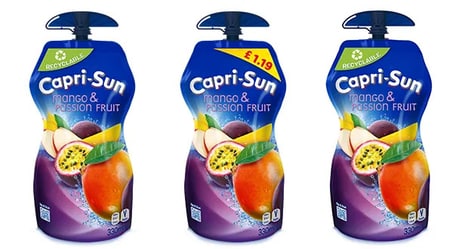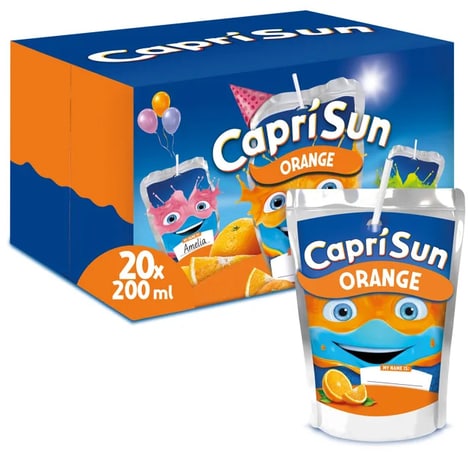
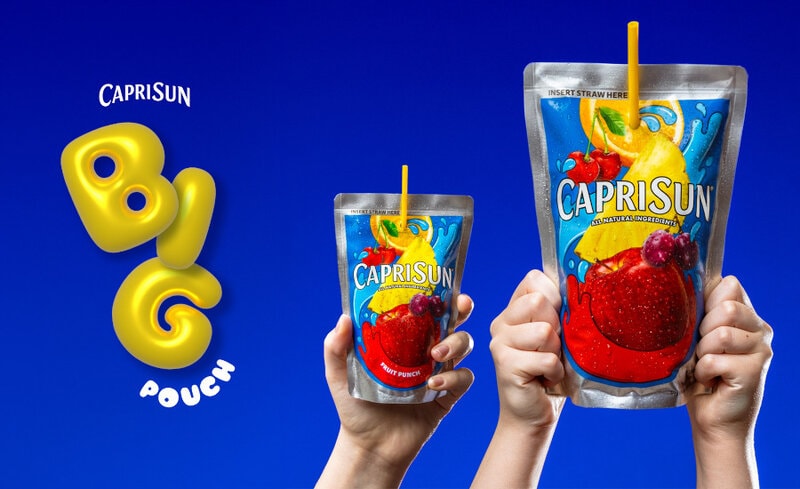
Capri Sun is testing a bigger way to sip a familiar favorite with the 'Big Pouch,' a pouch designed to hold roughly three times the juice of a classic one. The brand says it is the largest pouch it has ever tested, standing nearly nine inches tall and twice as wide as the standard size.
The limited-edition format arrives for a short run and will be sold exclusively on Walmart.com starting Monday, Sept. 21. That bigger footprint turns a familiar lunchbox staple into something closer to a shareable novelty, while still retaining the handheld pouch format fans already know.
For shoppers, this signals that the brand is treating packaging size as part of the experience, not just the container. It also suggests that familiar CPG beverage icons can still find room to play without altering the product's core identity. If the response is strong, more oversized-format experiments could follow.
Image Credit: Capri Sun
What's Driving This Trend
- Oversized Nostalgia Packaging
- Classic products gain renewed attention when familiar formats are exaggerated into novelty-sized experiences that preserve brand recognition while creating fresh social and retail appeal.
- Limited-edition Format Drops
- Scarcity-driven packaging experiments create collectible moments around everyday goods, giving legacy brands a low-risk way to test demand and cultural relevance.
- Shareable Single-serve Beverages
- Hybrid portion formats blur the line between personal convenience and group consumption, opening space for beverages designed around fun, visibility, and informal sharing.
Who This Affects Most
- Consumer Packaged Goods
- Packaging-led innovation offers established CPG brands a way to refresh mature products without reformulating the core item or disrupting supply familiarity.
- Beverage
- Novel serving sizes can transform routine drinks into experiential purchases, expanding how brands compete beyond flavor, function, or price.
- Retail E-commerce
- Exclusive online launches give retailers distinctive traffic drivers while enabling brands to measure consumer response to unconventional formats before broader distribution.