maXerial uses Computed Tomography and AI to streamline non-destructive component analysis for businesses in manufacturing, electronics, and additive industries.
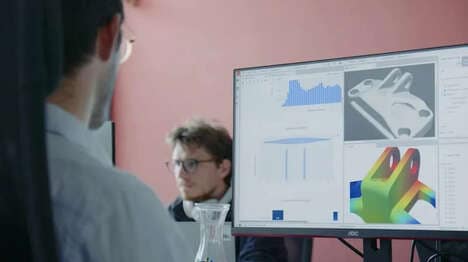
The industrial computed tomography solutions offered are a robust toolset for non-destructive component analysis. With applications spanning defect detection, assembly analysis, and dimensional measurements, the technology provides highly detailed 2D and 3D imaging for in-depth material and structural evaluation. Its ability to quantify porosity, fiber distribution, and wall thickness adds value to quality assurance and product development.
maXerial's AI tools focus on data-driven material science, providing powerful solutions for analyzing vast datasets through machine learning and statistical methods. These applications range from predictive modeling to optimizing production workflows. The company's 'One-Click AI Trainer' simplifies AI implementation as it enables non-experts to create predictive models efficiently.
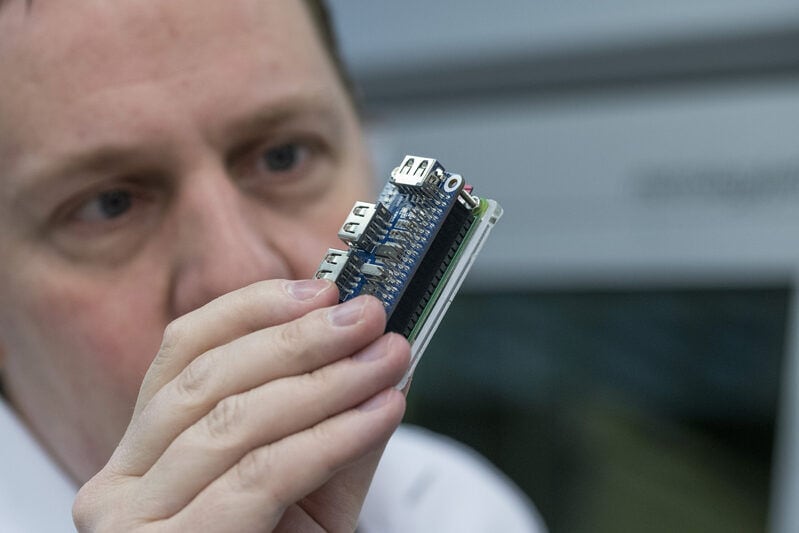
Image Credit: maXerial
Key Themes Behind This Trend
- AI-driven Material Science
- AI tools are revolutionizing material science by enabling comprehensive data analysis for optimizing material construction and performance.
- Advanced Non-destructive Testing
- Non-destructive testing technologies are evolving to include intricate 3D imaging techniques for precise structural evaluation.
- Streamlined Predictive Modeling
- Simplified AI interfaces are allowing non-experts to rapidly create predictive models, democratizing the use of advanced analytics in various industries.
Where This Applies
- Manufacturing Technology
- The manufacturing sector is integrating AI and imaging technologies to enhance quality control and component analysis.
- Additive Manufacturing
- Emerging technologies in the additive manufacturing industry facilitate sophisticated defect detection and material quality assurance.
- Electronics Diagnostics
- Electronics diagnostics are being transformed by computed tomography solutions, improving assessment accuracy for components and assemblies.