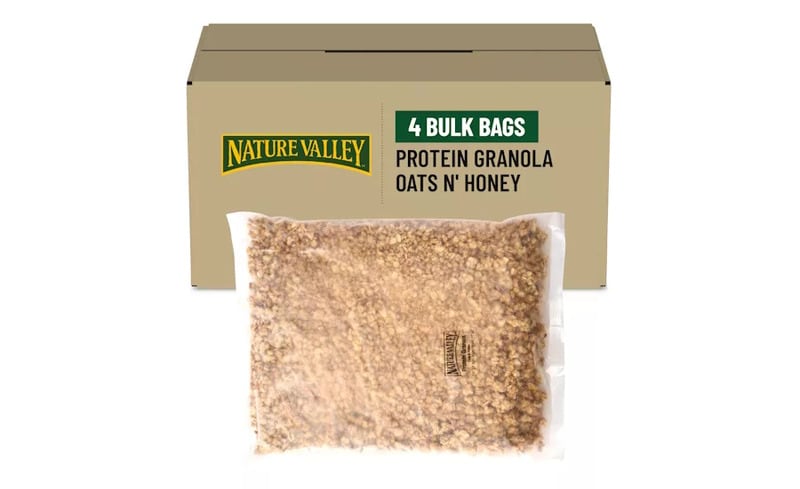
The Nature Valley Protein Granola Bulk Bags have been launched from General Mills Foodservice as part of the brand's initiative to build on its protein-forward solutions with a familiar twist. The product boasts 13-grams of protein per serving to position it as a nutrient-rich option that doesn't skimp on flavor, while also working well in a wide range of recipes. This includes such recipes as yogurt parfaits, smoothie bowls, overnight oats, protein bars, a crunchy breakfast option and more.
The Nature Valley Protein Granola Bulk Bags come in packs of four and are crafted with a whole grain oat recipe along with no artificial flavors or colors. The product, thanks to its packaging, will reduce waste and also increase efficiency within cafeteria dining setups.
Image Credit: General Mills Foodservice
What's Driving This Trend
- Protein-forward Bulk Ingredients
- A shift toward high-protein, bulk-format ingredients enables large-scale operations to offer nutrient-dense menu items without relying on per-portion specialty products.
- Versatile Menu Modularization
- Granola formulated for multi-use applications supports modular menu components that can be combined across breakfast, snacks and grab-and-go items to simplify culinary planning.
- Sustainable Bulk Packaging
- Larger multi-pack formats that reduce single-use packaging introduce opportunities to lower waste footprints while optimizing storage and servicing cycles in high-volume outlets.
Who This Affects Most
- Foodservice and Cafeteria Operations
- Bulk protein granolas can alter back-of-house workflows and ingredient sourcing strategies by providing a ready-to-use, shelf-stable component for diverse meal programs.
- Health-focused Consumer Packaged Goods
- Protein-forward formulations with clean-label claims present potential to expand product lines targeted at nutrition-conscious consumers seeking convenient, multifunctional pantry staples.
- Institutional Procurement and Supply Chains
- Demand for concentrated, multipack SKUs could reshape procurement contracts and logistics models by favoring suppliers that offer scalable, low-waste solutions for large institutions.