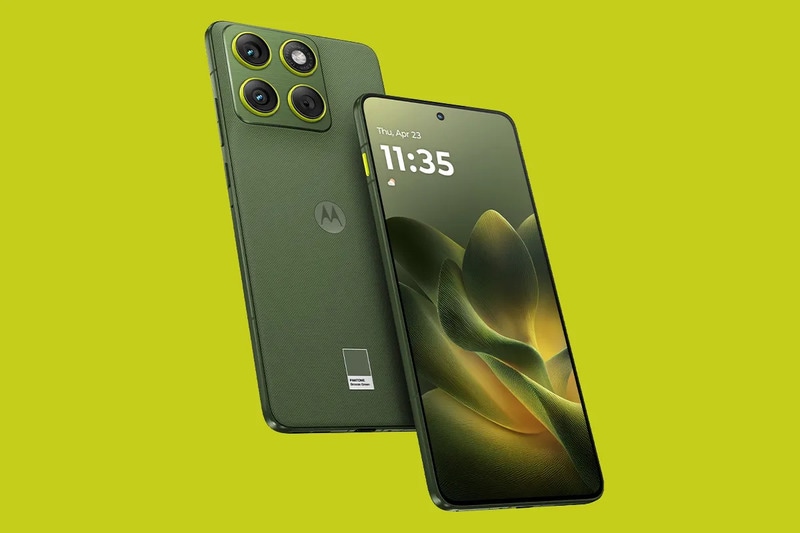
The Moto X70 Air smartphone has been announced as an upcoming ultra-thin mobile device from the brand that's engineered to compete with some of the latest super-slim models hitting the market as of late.
The smartphone measures in at less than 6mm in thickness, weighs 159-grams and is paired with a sizable 4,800mAh battery to support extended periods of use. The smartphone is powered by the Qualcomm Snapdragon 7 Gen 4 processor, has a 6.7-inch display and boasts a triple camera system on the rear.
The Moto X70 Air smartphone will arrive in China starting October 31 and is expected to launch in Europe in a slightly different iteration on November 5, 2025. The smartphone comes with an IP68 rating.
Image Credit: Motorola
Why This Trend Is Growing
- Ultra-thin Smartphone Design
- The trend toward ultra-thin smartphone design challenges traditional engineering, facilitating devices that maximize portability without compromising performance.
- Extended Battery Life in Slim Devices
- Demand for extended battery life in increasingly slim devices prompts innovations in battery technology, driving advancements that reconcile size with longevity.
- Multi-functional Camera Systems
- The inclusion of versatile, multi-functional camera systems in thin smartphone models pushes optical engineering to deliver advanced imaging capabilities within compact spaces.
Industries Being Reshaped
- Consumer Electronics
- The consumer electronics industry is witnessing a surge in ultra-thin device offerings, necessitating rapid innovations to maintain competitive edge.
- Mobile Processor Technology
- Advancements in mobile processor technology support the development of super-thin smartphones, promoting energy efficiency and enhanced processing power.
- Camera Manufacturing
- Camera manufacturing innovation is crucial as smartphones with slim profiles demand compact, high-performance camera systems for diverse imaging applications.