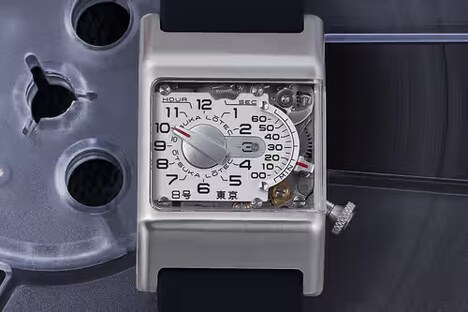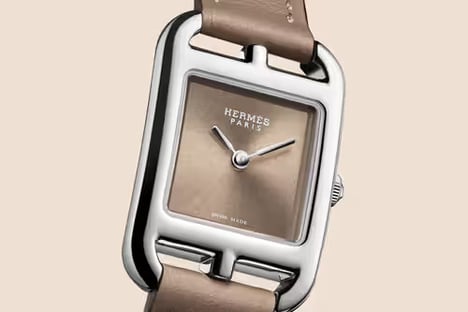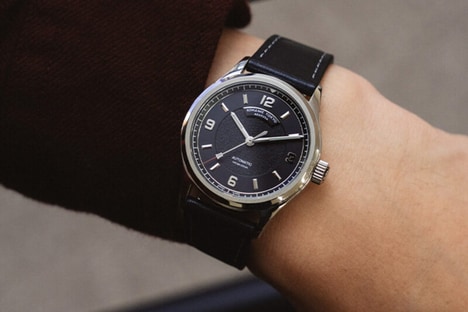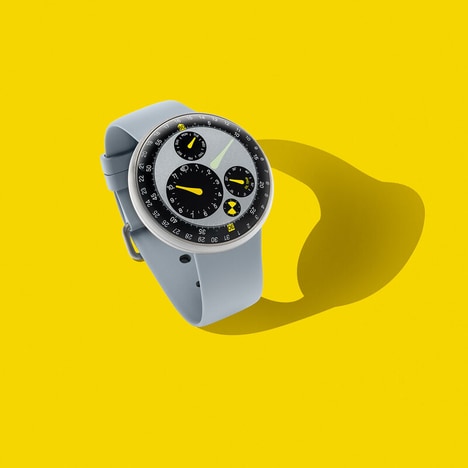
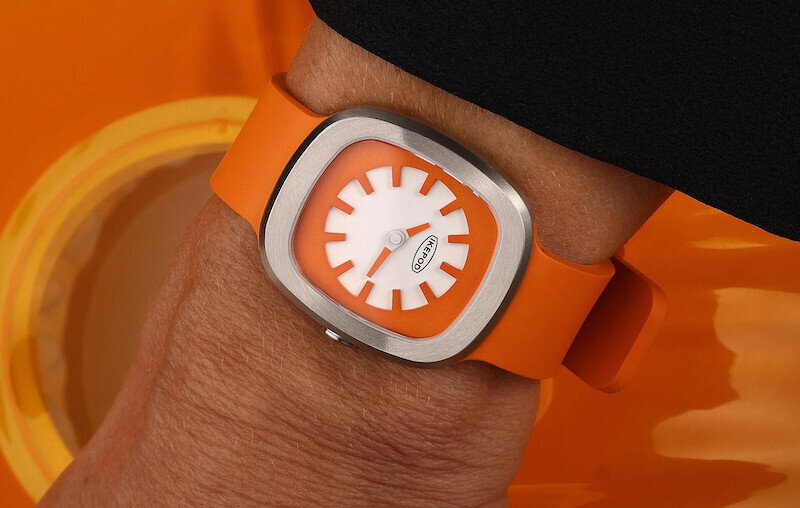
Ikepod’s Minipod revisits the distinctive shape of the brand’s Manatee watch, translating its rounded, curved case design into a smaller and more streamlined format. Rather than recreating the original, the new model uses the same design language as a starting point, with an integrated lugless case and a smooth transition into the strap. Its two-part dial adds another graphic element to the pared-back design.
Measuring 33.3mm by 38mm and 8.7mm thick, the Minipod has a compact profile and comes with an integrated FKM rubber strap. Sapphire crystal and 5 ATM water resistance add practical features, while the Manatee’s GMT function has been replaced with a simpler two-hand display powered by a Miyota 2036 quartz movement.
Available in eight colourways for €690, the Minipod puts the emphasis firmly on its shape and visual identity. Its smaller proportions and straightforward movement make it less about mechanical complexity and more about treating the watch as a considered design object.
Image Credit: ikepod
Why This Trend Is Growing
- Compact Design Watches
- Smaller case proportions and simplified movements create space for accessible luxury products that prioritize wearability, visual identity, and everyday design appeal.
- Sculptural Wearables
- Rounded, lugless forms signal demand for accessories that function as expressive design objects rather than purely technical or status-driven devices.
- Color-driven Minimalism
- Multiple colorways paired with pared-back interfaces highlight opportunities for brands to refresh minimalist products through personalization and graphic variation.
Industries Being Reshaped
- Watchmaking
- Quartz-powered design-led models broaden the category by making distinctive case architecture more attainable without relying on mechanical complexity.
- Fashion Accessories
- Integrated straps, compact silhouettes, and bold shapes align timepieces with style-driven accessory markets where form and color influence purchase decisions.
- Industrial Design
- Reworked heritage shapes demonstrate how established product languages can be scaled and simplified for contemporary consumers seeking practical statement objects.