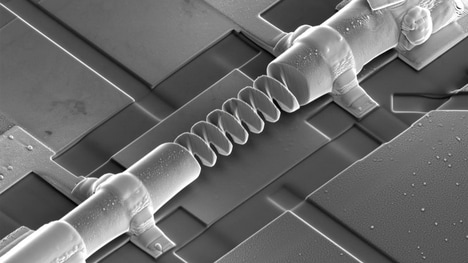
Scientists in Germany and Singapore have combined their efforts to produce micromotors with built-in compasses that can be guided using a magnetic field.
Each micromotor is composed of a microtube containing a platinum catalyst and iron. When the catalyst reacts with hydrogen peroxide, it produces a stream of oxygen bubbles that propel the tube forward while the iron enables it to be controlled by the presence of a magnetic field. The goal of the research is to create self-propelled autonomous devices that are easy to navigate in real-world environments.
According to nanomotor expert Ayusman Sen from Pennsylvania State University, in the future, “multifunctional micromotors are expected to create new opportunities in situations that require exquisite control over the directionality of motion, such as drug delivery and minimally invasive surgery.”
What's Driving This Trend
- Micromotors with Built-in Compasses
- The integration of compasses into micromotors presents opportunities for precise control over the directionality of motion in various applications like drug delivery and minimally invasive surgery.
- Self-propelled Autonomous Devices
- The development of self-propelled autonomous devices opens up possibilities for new innovations in real-world navigation and exploration.
- Exquisite Control Over Motion
- The advancement in micromotors allows for fine-grained control over motion, providing opportunities for enhanced precision in fields like medicine and robotics.
Who This Affects Most
- Medicine
- The medical industry can leverage micromotors with built-in compasses to enhance drug delivery and enable more precise and minimally invasive surgical procedures.
- Robotics
- The robotics industry can benefit from the development of self-propelled autonomous devices, improving the capabilities of robots for navigation and exploration tasks.
- Nanotechnology
- The field of nanotechnology can utilize the exquisite control over motion provided by micromotors to develop innovative applications in various domains such as materials science and energy.