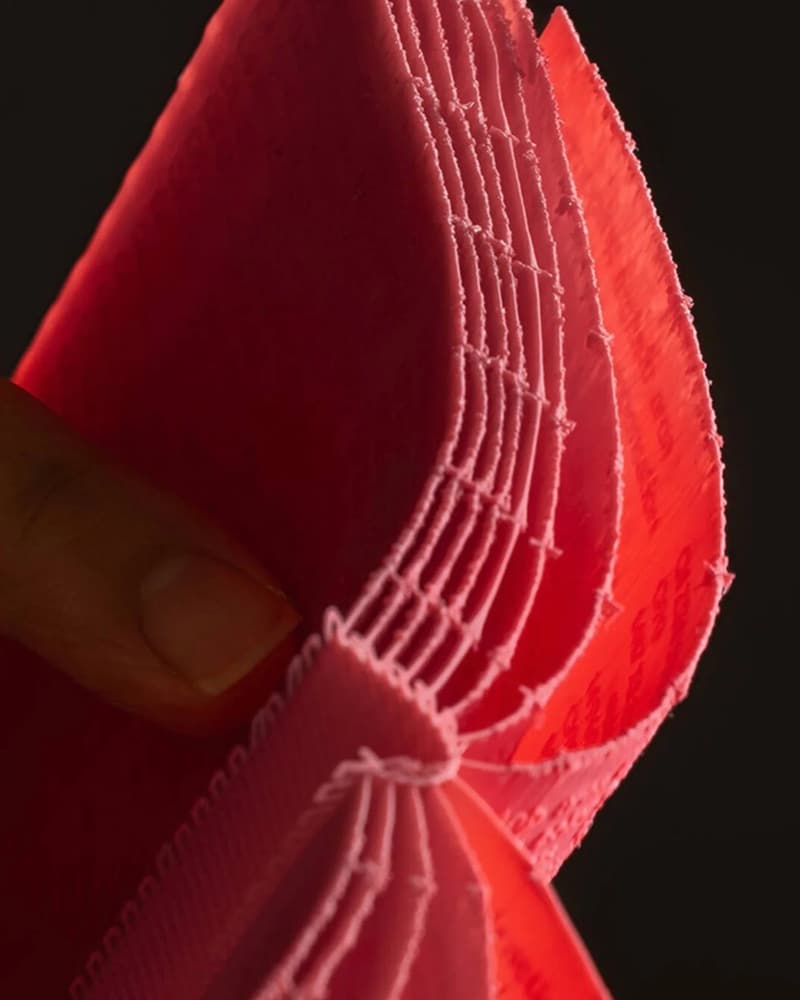
The Manual project is an experimental publication created by Studio Darius Ou in collaboration with Benson Chong that explores the relationship between digital fabrication and printed media. Produced as a fully 3D-printed object, the book incorporates raised G-code across its pages, allowing the instructions used during fabrication to become part of the finished work itself. The project transforms machine commands into tactile content that can be both seen and touched. The result is a book that documents its own production process while functioning as a physical object for reading and interaction.
It was fabricated using an XY-for-Z printing method, which allows the structure to emerge from the printer as a completed bound book without additional assembly. Pages, binding, and embossed content are produced simultaneously through a continuous manufacturing process. By integrating fabrication instructions directly into the design, Manual examines ideas of self-reference, digital authorship, and material transparency.
Image Credit: Studio Darius Ou, Benson Chong
What Makes This Trend Stand Out
- Embedded Fabrication Metadata
- A new medium where manufacturing instructions are integrated into final objects as readable design language, enabling provenance and process transparency to become part of the user experience.
- Tactile Code Content
- Physical translation of machine-readable instructions into embossed or textured surfaces that function as both aesthetic detail and documentary record of production.
- Continuous Assembly Printing
- A printing approach that produces bound, multi-component artifacts in a single uninterrupted process, reducing post-production steps and illustrating new possibilities for consolidated fabrication workflows.
Sectors Adopting This
- Books and Publishing
- Materials and formats that embed production narratives offer publishers novel collectible editions that foreground authorship, process, and materiality as part of the reading object.
- Additive Manufacturing
- Layered fabrication techniques that encode process data into parts present opportunities for traceable supply chains and machine-to-human translations of production history.
- Museums and Cultural Institutions
- Exhibits and conservation practices that incorporate self-documenting artifacts create new frameworks for interpreting technological provenance and preserving process-based cultural objects.