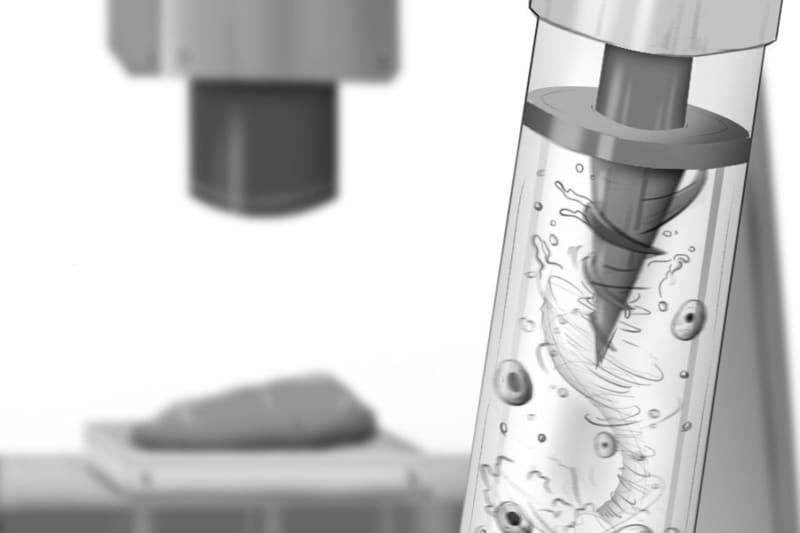
MIT researchers introduced the MagMix magnetic propeller system for 3D bioprinting that keeps cells suspended inside printer syringes during long runs, featuring a small magnetic propeller driven by an external motor-mounted permanent magnet. The design was presented in Device and was demonstrated by a team led by Ritu Raman and postdoc Ferdows Afghah.
The apparatus used computer-optimized propeller geometries and controlled rotation speeds to prevent settling across multiple bioink formulations, and testing showed it maintained uniform cell distribution for more than 45 minutes while cutting nozzle clogs and preserving cell viability. The team validated performance experimentally and printed cell constructs that matured into muscle tissues over days.
Because MagMix mounts on standard bioprinters and does not require reformulating bioinks, it improves print consistency and workflow for researchers building large tissues, supporting more reliable disease models, drug tests and steps toward regenerative applications.
Image Credit: MIT
Why This Trend Is Growing
- In-syringe Active Mixing
- Consistent maintenance of cell suspension within printer syringes during extended runs, reducing sedimentation-related variability in bioprinted constructs.
- Magnetic Micropropeller Actuation
- Compact magnet-driven propellers with optimized geometries for low-shear mixing that preserve cell viability while preventing nozzle clogs.
- Modular Bioprinter Accessory Ecosystems
- Standardized, mountable add-ons that integrate with existing bioprinters to enhance functionality without requiring bioink reformulation.
Industries Being Reshaped
- Bioprinting and Tissue Engineering
- Improved print consistency and cell viability that supports production of larger, more reliable tissue constructs for research and eventual therapeutic use.
- Pharmaceutical Drug Development
- More reproducible tissue models for drug screening and disease modeling arising from uniform cell distribution in printed constructs.
- Medical Device Manufacturing
- Retrofitable magnetic mixing modules that create opportunities for accessory-driven performance upgrades to existing bioprinter hardware lines.