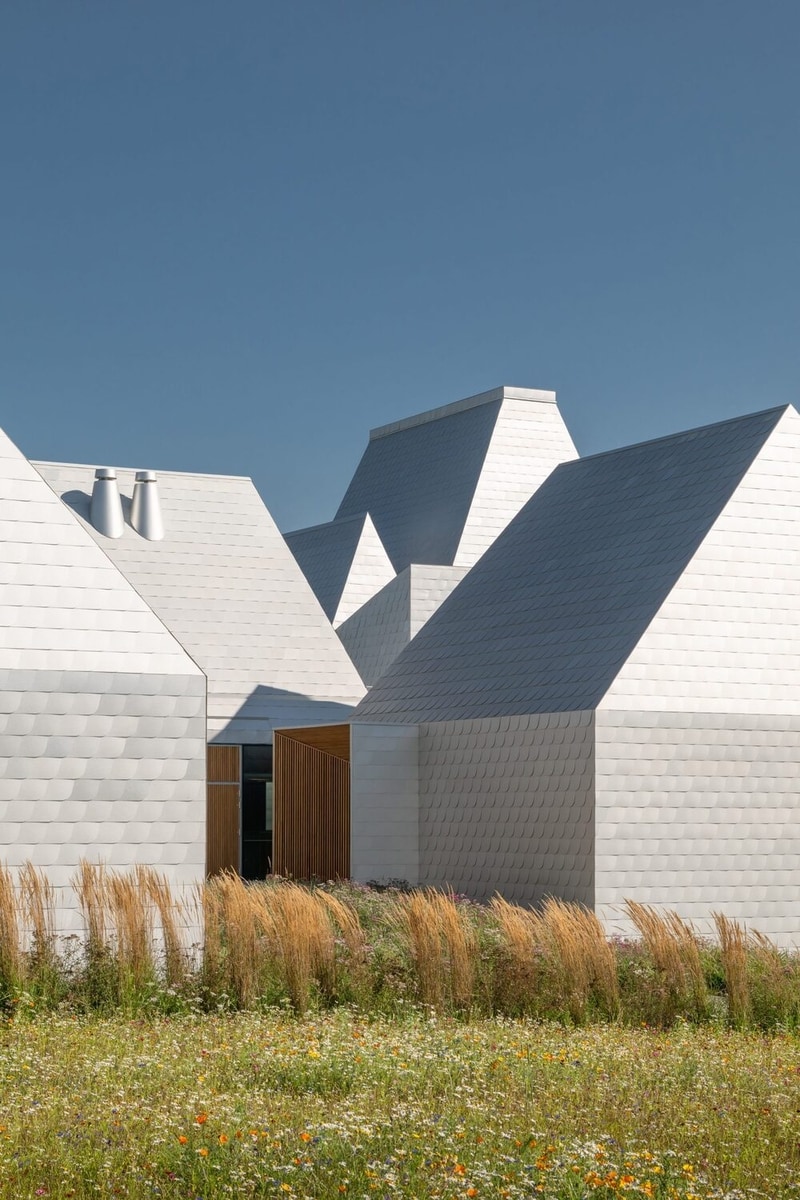
The Lost Shtetl Jewish Museum by Lahdelma & Mahlamäki Architects is a cultural institution in Šeduva, Lithuania dedicated to the Jewish community that once lived in the town. The Lost Shtetl Jewish Museum was conceived as a memorial to the residents of Šeduva and to the broader culture of Eastern European shtetls that disappeared during the Holocaust. The project forms part of a larger memorial complex that includes a restored Jewish cemetery and monuments marking nearby mass-execution sites where hundreds of residents were killed in 1941.
The architecture is arranged like a small village, reflecting the structure of historic shtetl towns. Several gabled volumes surround a central building containing the reception area, library, café, and administrative spaces, while exhibition galleries present the history of Jewish life in Lithuania and its destruction during the Second World War. The design draws from traditional rural Lithuanian architecture and local farmhouses.
Image Credit: Aiste Rakauskaite, Kuvatoimisto Kuvio
Key Themes Behind This Trend
- Village-like Cultural Complexes
- An architectural approach that replicates traditional townscapes within museum campuses, enabling immersive communal narratives and layered visitor experiences.
- Memorialized Architectural Storytelling
- A design strategy that embeds historical trauma and memory into building forms, creating environments where spatial sequencing conveys layered historical narratives.
- Local Vernacular Revival
- The reintroduction of regional farmhouse typologies and materials into contemporary cultural buildings, producing tangible links between heritage craft and modern interpretation.
Where This Applies
- Museum and Heritage Management
- Curatorial programs and operations structured around village-scaled sites, which reshape collection presentation and long-term interpretive planning.
- Cultural Tourism and Destination Design
- Tourism offerings centered on reconstructed communal environments that broaden visitor expectations for immersive, place-based heritage experiences.
- Architectural Conservation and Restoration
- Conservation practices that combine restoration of historic fabric with new village-like insertions, altering preservation workflows and material sourcing.