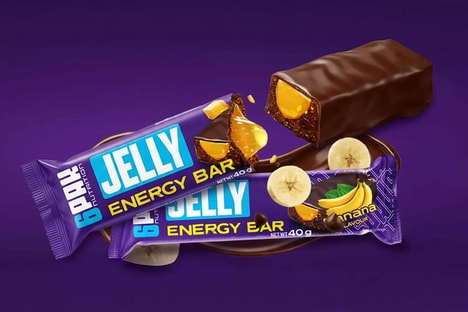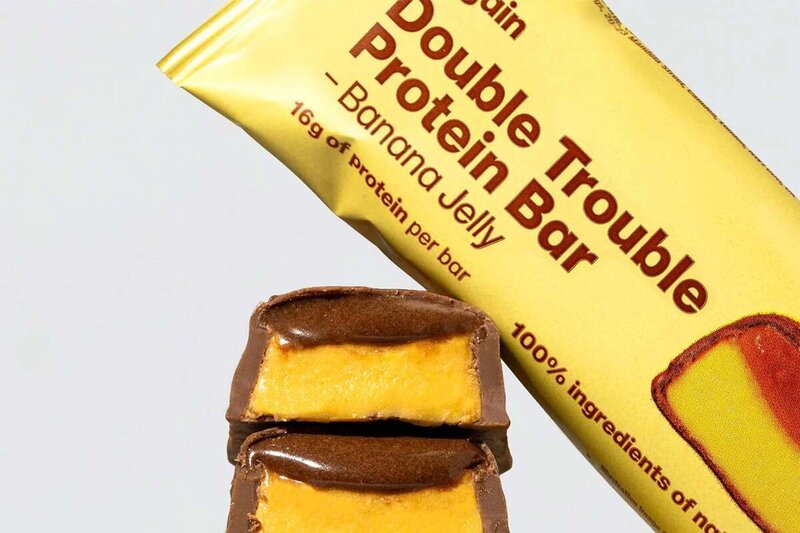
Vilgain is expanding its 'Double Trouble Protein Bar' with a Banana Jelly flavor, giving the line a fruitier, dessert-leaning option without drifting from the protein-snack aisle. The Czech brand's bar pairs banana jelly with cocoa cream inside a milk chocolate coating, so each bite mixes soft fruit sweetness with a richer chocolate layer.
Like the earlier Peanut Butter & Raspberry Jelly version, this extension leans on layered textures rather than a single flavored base. Each bar has 16g of protein and 215 calories, keeping the indulgent profile close to an everyday snack instead of turning it into a candy-style detour.
For shoppers, this gives another reason to choose a protein bar for taste as much as function, especially when a standard dough-centered format starts to feel repetitive. It also nudges the category toward more multisensory snack design, where texture does as much work as flavor.
Image Credit: Stack3d
What's Driving This Trend
- Dessert-inspired Protein Bars
- Indulgent flavor cues from candy and bakery formats create room for functional snacks that satisfy cravings while maintaining nutrition credentials.
- Layered Snack Textures
- Multicomponent fillings, coatings, and creams are reshaping protein bars into more sensory-driven products that stand out from uniform dough-based formats.
- Fruit-and-chocolate Pairings
- Classic dessert combinations such as banana and cocoa offer protein snack brands a familiar yet differentiated platform for premium flavor expansion.
Who This Affects Most
- Functional Snacks
- The convergence of taste, texture, and protein content signals growth potential for everyday snacks positioned between wellness and indulgence.
- Sports Nutrition
- Broader flavor experimentation can help performance-oriented products appeal to mainstream consumers beyond traditional fitness-focused audiences.
- Confectionery
- Candy-inspired layering and fillings present opportunities for confectionery brands to enter better-for-you formats without abandoning sensory richness.