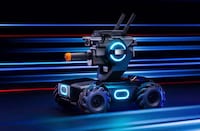
The students at Stanford University's Experimental Robotics program have been hard at work creating the 'Jedi Bot.' Essentially, it's a robot that wields a plastic swords much like a light saber, and its function is to fight and train its opponent.
Unfortunately, this is not an artificial intelligence robot, and it cannot predict your next move. However, this robot is still mighty impressive because of its ability to react to your movements. If this robotic arm could move any faster, it would be a much more dangerous training tool than it is. For now, the Jedi Bot is useful for its fluid movements and targeting abilities. If this was available for purchase, the world would then be full of Jedi masters.
Why This Trend Is Growing
- Robotic Combat Training
- The development of the 'Jedi Bot' showcases the potential for robotic systems to revolutionize combat training by providing realistic opponents.
- Enhanced Reaction Capabilities
- The Jedi Bot's impressive ability to react to an opponent's movements creates opportunities for industries to develop faster and more agile robotic systems.
- Fluid Motion Control
- The fluid movements and targeting abilities of the Jedi Bot highlight the potential for industries to improve motion control technology and create more versatile robots.
Industries Being Reshaped
- Robotics
- The development of the Jedi Bot demonstrates the disruptive innovation opportunities in the robotics industry for creating advanced combat training systems.
- Education and Training
- The Jedi Bot opens up possibilities for the education and training industry to integrate realistic and interactive combat training tools for various disciplines.
- Motion Control Technology
- The fluid and precise motion control exhibited by the Jedi Bot presents opportunities for industries to advance motion control technology in sectors such as manufacturing and healthcare.