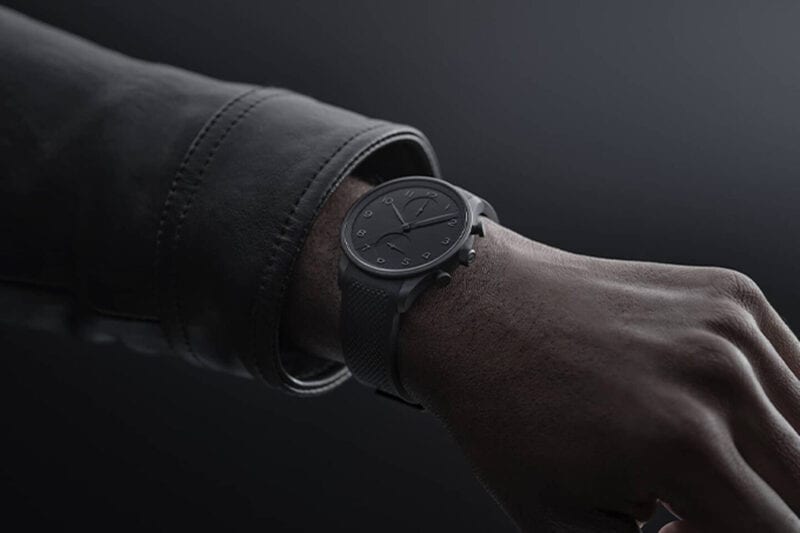
The IWC Portugieser Chronograph Ceratanium timepiece has been debuted by the Swiss watchmaker as a durably chic accessory that puts a hybrid material in the focus. The watch is constructed using the namesake Ceratanium material that's positioned as a hybrid alloy that combines the lightweight, durable profile of titanium with the scratch-resistant, matte profile of ceramic. The watch thus weighs in at 40% lighter than steel alternatives with impressive scratch resistance, while the convex sapphire glass lens extends the scratch-avoiding profile to the face.
The IWC Portugieser Chronograph Ceratanium timepiece measures in at 41mm, is powered by the IWC Calibre 69355 automatic column-wheel chronograph and is paired with a textured black rubber strap with a Ceratanium pin buckle to match. Limited to 1,500 examples, the watch is available now for $14,600.
Image Credit: IWC
What Makes This Trend Stand Out
- Hybrid Titanium-ceramic Materials
- The emergence of alloys combining titanium's lightness with ceramic's scratch resistance creates new material classes that redefine durability and finish in high-end goods.
- Lightweight Premium Design
- A shift toward sub-50% weight reductions versus steel alternatives is enabling luxury items that deliver comfort without sacrificing perceived value or robustness.
- Scarcity-led Luxury Releases
- Limited runs and numbered editions are reinforcing exclusivity as a product attribute that amplifies secondary-market value and brand prestige.
Sectors Adopting This
- Watchmaking
- Precision timepiece makers can leverage hybrid materials and advanced coatings to offer chronographs that combine high performance, distinctive matte aesthetics, and reduced wearer fatigue.
- Luxury Accessories
- Bracelet, eyewear and leather-good segments may incorporate hybrid alloys to produce lighter, more scratch-resistant products with a technical-luxury appeal.
- Advanced Materials Manufacturing
- Producers of engineered alloys and surface treatments stand to expand into consumer-facing applications by scaling processes that join metallic toughness with ceramic surface integrity.