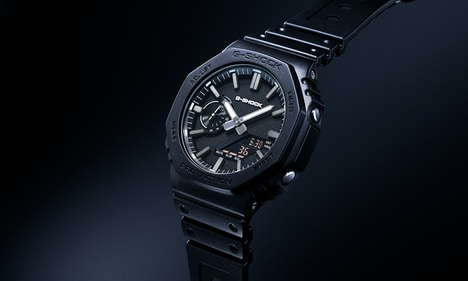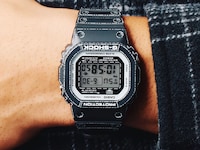
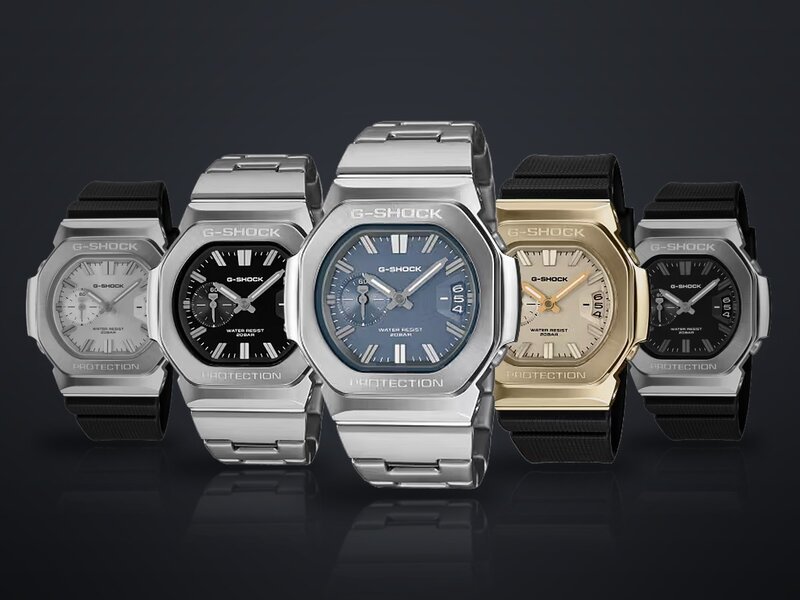
Casio turns the square DW-5000C idea into the GMC-2500, an analog G-Shock watch built for owners who want hands instead of a digital screen. Its minute hand uses a magnetic mount called Shock Release Hand, so a hard knock can displace it briefly and the watch can settle back on its own.
Its date window also shows stopwatch minutes and, once set, stays current through 2099, while 200m water resistance keeps the watch useful beyond office wear. A stoppable small seconds hand trims battery use. Sales start in Japan in November 2026 across steel-bracelet and resin-band builds.
The magnetic minute hand turns shock protection into a visible feature, giving analog-watch buyers a reason to choose this line. Japan availability in November keeps the rollout narrow, while the GMC-2500 widens G-Shock's square format below its Tough Solar and Bluetooth models.
Image Credit: Casio
Key Themes Behind This Trend
- Self-resetting Components
- Magnetic mounts and displacement-tolerant mechanisms introduce new durability cues for products that can recover from impacts without complex digital systems.
- Analog Ruggedization
- Traditional hand-based interfaces gain renewed relevance when paired with shock absorption, water resistance, and utility features typically associated with performance gear.
- Visible Durability Design
- Engineering features that visibly respond to stress can turn protection into a product differentiator for consumers who value mechanical reassurance.
Where This Applies
- Watches
- Analog timepieces can expand beyond heritage styling by integrating resilient mechanisms that preserve familiar formats while improving everyday toughness.
- Consumer Electronics
- Impact-tolerant hardware design creates opportunities for devices that reduce failure points through passive recovery features rather than added connectivity.
- Outdoor Gear
- Rugged accessories with low-maintenance functions can appeal to active users seeking dependable equipment that transitions between work, travel, and harsh conditions.