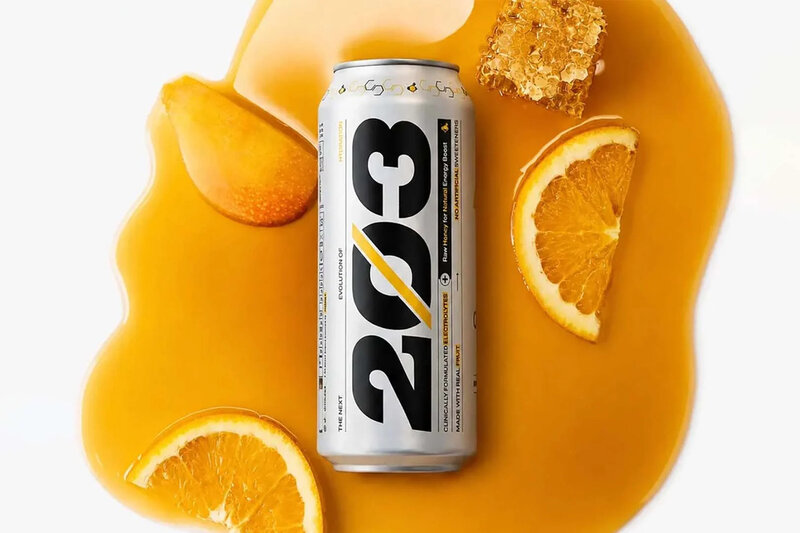
US-based 2O3 brought a middle-ground option to performance hydration with the '2O3 Electrolytes Drink,' a non-carbonated, caffeine-free can that pairs raw honey with a sports-drink-style mineral blend. Built from a recipe co-founder Johnny Kaufman used in training, it provides rehydration and quick fuel in a single 16-ounce serving.
Each can contains 1,000 mg of sodium sourced from sea salt to support rehydration, while raw honey supplies 20 g of carbohydrates so the drink delivers fuel alongside fluids. 'Hydro-Lime' and 'Orange Mango' are available through the brand's online store.
At $42 per case, 2O3 shows how honey-based hydration can work as a direct-to-consumer training product rather than a grab-and-go beverage, with raw honey and high sodium shifting the category toward drinks that replace fluids and add workout fuel in one purchase.
Image Credit: Stack3d
What's Driving This Trend
- Honey-fueled Hydration
- Natural sweeteners are reframing sports drinks as functional fuel systems that combine recognizable ingredients with performance-oriented electrolyte profiles.
- High-sodium Training Drinks
- Elevated mineral formulations create space for endurance-focused beverages that serve heavy sweaters and serious athletes beyond mainstream low-sodium refreshment cues.
- Direct-to-consumer Performance Beverages
- Online-first distribution allows niche hydration brands to target training communities with specialized formulations before competing in traditional convenience retail.
Who This Affects Most
- Sports Nutrition
- Ingredient-led hydration products expand the category from powders and gels into ready-to-drink formats that merge carbohydrate fueling with fluid replacement.
- Functional Beverages
- Caffeine-free, non-carbonated cans highlight growing demand for purpose-built drinks that prioritize specific physiological benefits over broad lifestyle positioning.
- E-commerce Grocery
- Case-based online sales give emerging beverage labels a scalable channel for premium, mission-specific products that may not fit impulse-driven retail shelves.