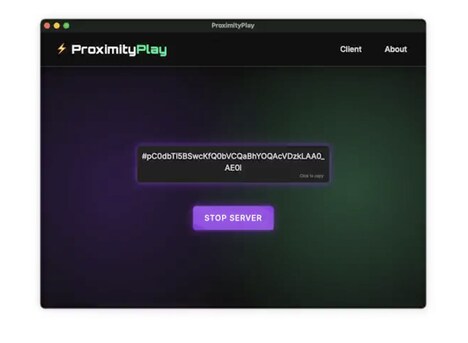
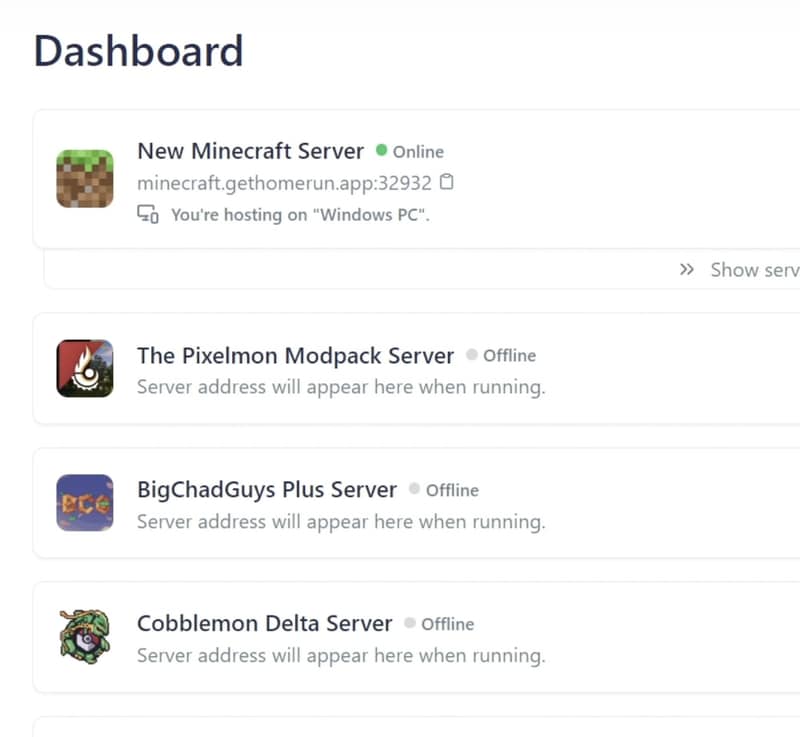
Homerun Desktop is a software application designed to enable users to host and manage Minecraft servers directly from their personal devices. It allows individuals to create private or unlimited servers without requiring advanced technical setup.
The platform includes a collaborative hosting feature that enables server ownership or control to be transferred between users, allowing worlds to remain active even when the original host is offline. This supports continuous gameplay sessions and shared management among groups. The system emphasizes user control and privacy by keeping server hosting localized rather than relying solely on external infrastructure. It is positioned for gamers who want greater flexibility in managing multiplayer environments. Homerun Desktop reflects a broader trend in decentralized game hosting solutions that prioritize accessibility, peer collaboration, and simplified server management for non-technical users.
Image Credit: Homerun Desktop
What Makes This Trend Stand Out
- Decentralized Game Hosting
- Shifting server control to users' devices creates opportunities for distributed, resilient multiplayer environments that reduce reliance on centralized datacenters.
- Collaborative Ownership Models
- Shared transfer of server ownership enables persistent communal worlds and new models for governance, monetization, and trust among player groups.
- Privacy-first Localized Servers
- Keeping hosting localized emphasizes personal data control and low-latency play, opening possibilities for privacy-centric multiplayer services tailored to niche communities.
Sectors Adopting This
- Gaming Platform Providers
- Platform vendors can be reshaped by integrating peer-to-peer hosting features that alter matchmaking, content distribution, and subscription economics.
- Cloud Infrastructure Providers
- Edge and hybrid providers face pressure to offer lightweight orchestration and synchronization tools that complement device-hosted game instances.
- Education and Edtech
- Classroom and educational game deployments could leverage private collaborative servers for controlled, persistent learning environments and assessment tracking.