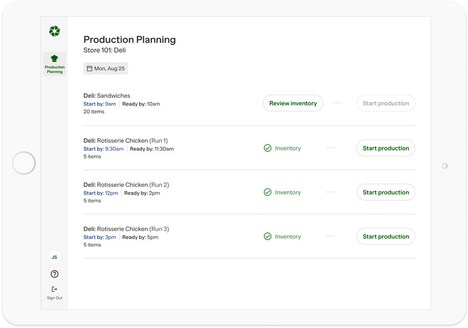
Afresh, a company specializing in artificial intelligence solutions for the grocery industry, has expanded its grocery platform to now manage replenishment, demand forecasting, inventory, and distribution center buying across every department within a store. While the brand originally focused on "the fresh perimeter," its service now includes center store, frozen foods, general merchandise, and health and beauty.
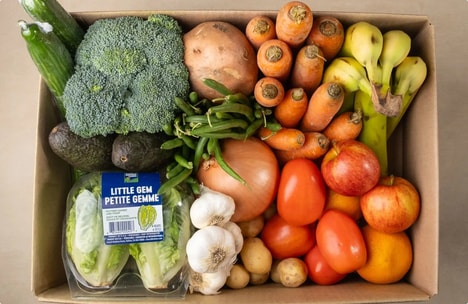
This expansion of Afresh's AI-powered grocery platform means that grocers can now oversee all items — from produce without barcodes and random-weight meats to packaged pasta, dish soap, and shampoo — on a single unified AI system. The technology is designed to adapt its intelligence to the specific operational constraints of each department, while also managing in-store production and limited shelf life for fresh items.
Image Credit: Afresh
What Makes This Trend Stand Out
- Unified AI Inventory and Forecasting
- Consolidation of inventory, replenishment and demand forecasting onto a single AI platform redefines supply chain visibility and reduces overstock and waste across departments.
- Freshness-aware Demand Forecasting
- Forecasting that incorporates perishability and limited shelf life brings granular timing signals that change reorder cadence and markdown planning for fresh items.
- Department-specific AI Adaptation
- Models tailored to the unique constraints of produce, random-weight meats, center-store and frozen categories create differentiated demand insights and operational prescriptions for each department.
Sectors Adopting This
- Grocery Retail
- End-to-end AI management across perishables and packaged goods transforms store-level replenishment rhythms, shrink management and labor allocation.
- Food Distribution and Distribution Centers
- Centralized AI-driven buying across distribution centers reshapes inventory allocation, cross-docking priorities and the handling of mixed product formats.
- Consumer Packaged Goods
- Access to unified retailer data on in-store production, random-weight items and shelf-level demand provides granular signals that can upend assortment, packaging and promotional strategies.