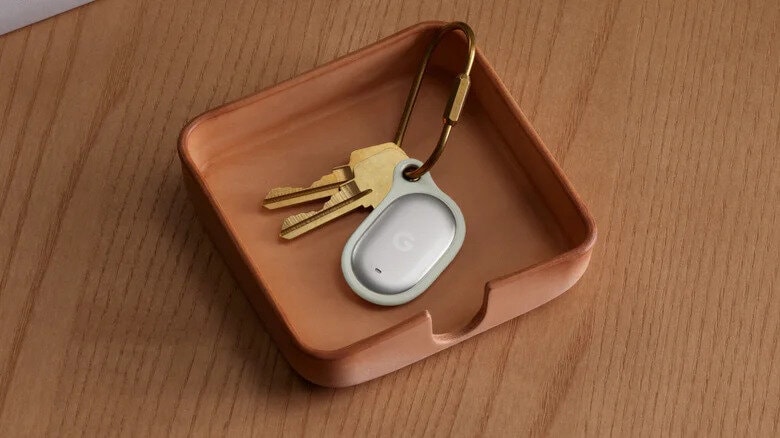
Google has introduced the Pixel Tag alongside the Pixel 11 lineup, marking its entry into Bluetooth item tracking for Android users. Compatible with devices running Android 9 and later, the compact tracker supports Bluetooth Channel Sounding for more accurate distance measurements on Android 16 devices equipped with Bluetooth 6.0. It also features Ultra Wideband (UWB) technology for Precision Finding, allowing compatible smartphones to display both the direction and exact distance to misplaced belongings. The elongated, pill-shaped design closely follows the form factor of other modern Bluetooth trackers while remaining compact enough for keys, bags, and luggage.
Built for everyday use, the Pixel Tag carries an IP67 rating for dust and water resistance and can survive submersion in up to one meter of water for 30 minutes. A replaceable CR2032 coin-cell battery delivers up to one year of use before needing replacement. Google has priced the tracker at $29, with a four-pack available for $99, and pre-orders are now open ahead of its August 20 launch.
Image Credit: Google
Why This Trend Is Growing
- Precision Item Tracking
- UWB and Bluetooth Channel Sounding are making lost-item recovery more exact, creating space for location services that blend proximity, direction, and real-time distance data.
- Android Accessory Ecosystems
- Google’s entry into tracking tags signals a broader opportunity for Android-native accessories that integrate more deeply with phones, operating systems, and everyday mobility needs.
- Durable Everyday Devices
- Water resistance, compact formats, and replaceable batteries are reshaping expectations for low-cost connected products designed for frequent use across keys, bags, and luggage.
Industries Being Reshaped
- Consumer Electronics
- Compact trackers expand the role of smartphones as hubs for personal asset management, opening pathways for companion devices tied to platform loyalty.
- Travel and Luggage
- Accurate tracking tags create new value in baggage monitoring, where luggage brands and travel services can differentiate through embedded or bundled location features.
- Wireless Connectivity
- Advances in Bluetooth 6.0 and UWB highlight demand for more precise short-range positioning, supporting innovation in chips, modules, and location-based infrastructure.