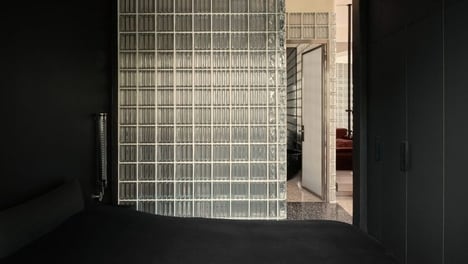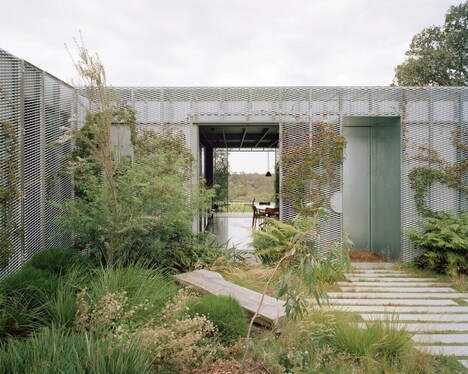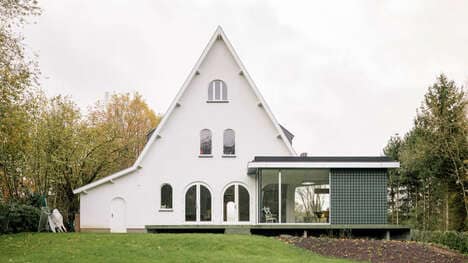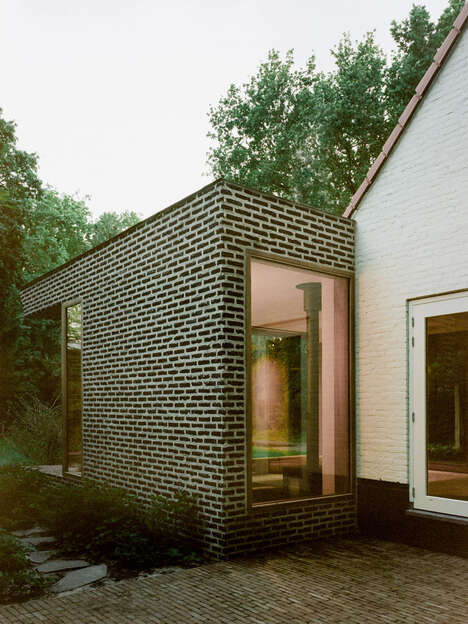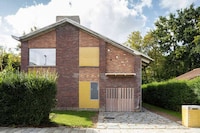
The Glass Brick House by Delmulle Delmulle architecten in Ghent combines a discreet street façade with a fully glazed upper volume that overlooks lush courtyard gardens. Set behind a closed, slate-pedestal base, the house preserves neighborhood privacy while introducing a serene oasis within.
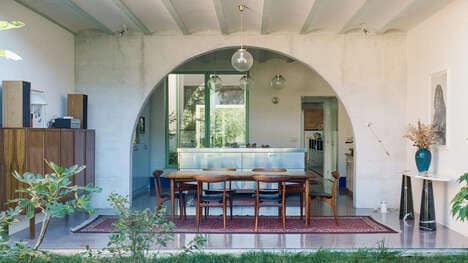
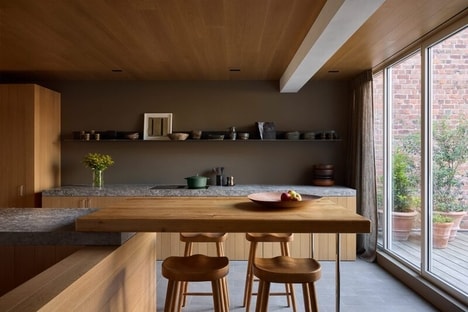
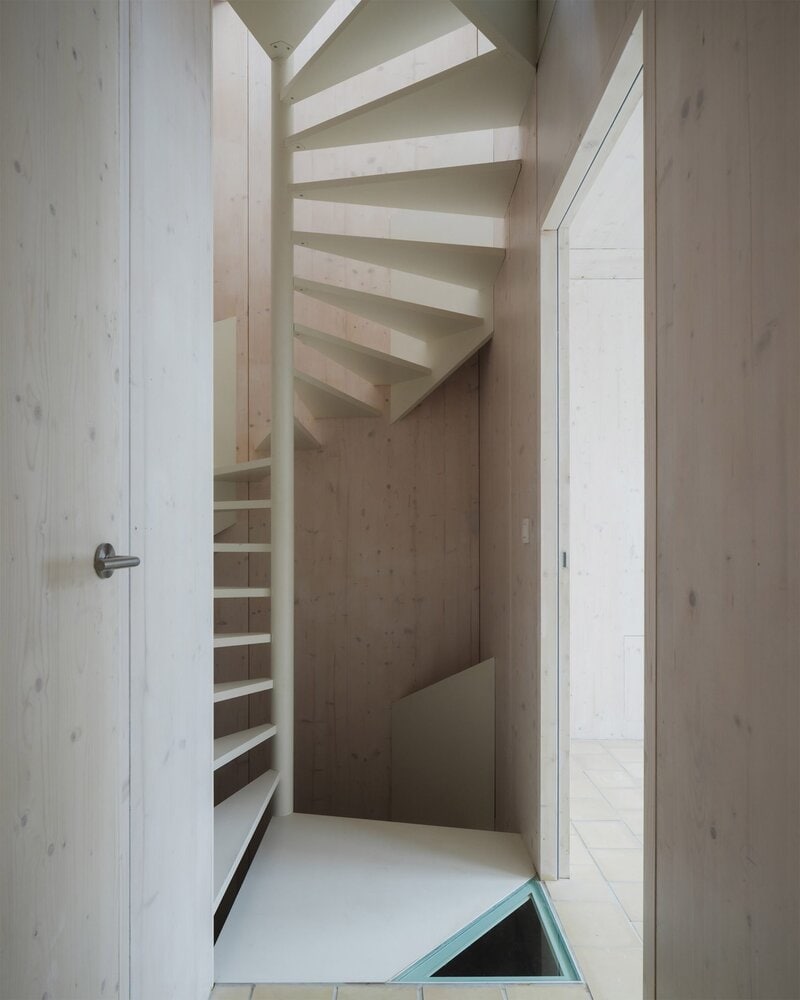
The architect duo designed the glass-clad first floor as a lightweight wooden box that appears to float above the planted courtyards, with large windows flooding interiors with daylight. Inside, this luminous volume hosts communal spaces—living, dining, and kitchen—where natural materials like timber ceilings and muted tones create warmth and contrast against the urban backdrop.
By layering dense greenery at ground level and elevating human spaces above, the design orchestrates a dialogue between privacy, openness, and nature. The retracting façade along the street ensures calm separation, while rooftop planting and courtyard gardens enhance biodiversity and microclimate. This approach reframes urban living: a transparent volume atop a protective plinth allows residents to feel connected to the sky and greenery, despite a tight site. The result is a peaceful, light-filled home that fuses architecture and landscape in a refined, context-sensitive gesture.
Image Credit: Johnny Umans
Why This Trend Is Growing
- Hybrid Privacy Architecture
- Architectural designs are evolving to balance transparency and privacy, using innovative materials like glass bricks that allow natural light while maintaining seclusion.
- Biophilic Urban Living
- Integrating lush greenery into urban residential designs creates opportunities for enhanced well-being and biodiversity, transforming dense city environments into tranquil havens.
- Floating Architectural Elements
- Structures that appear to float, such as the lightweight wooden boxes in multi-level homes, present new avenues for merging aesthetic elegance with functional design in urban settings.
Industries Being Reshaped
- Sustainable Urban Development
- Innovative housing designs that incorporate sustainability principles, such as rooftop planting and courtyard biodiversity, redefine urban development by promoting ecological balance.
- Glass Manufacturing and Technology
- Advancements in glass brick technology create novel opportunities for manufacturers to deliver materials that enhance building aesthetics while addressing privacy and climate control.
- Interior Design and Furnishing
- The trend towards open, light-filled spaces that blend natural materials with modern design elements opens up new markets for interior solutions that complement these airy, biophilic environments.