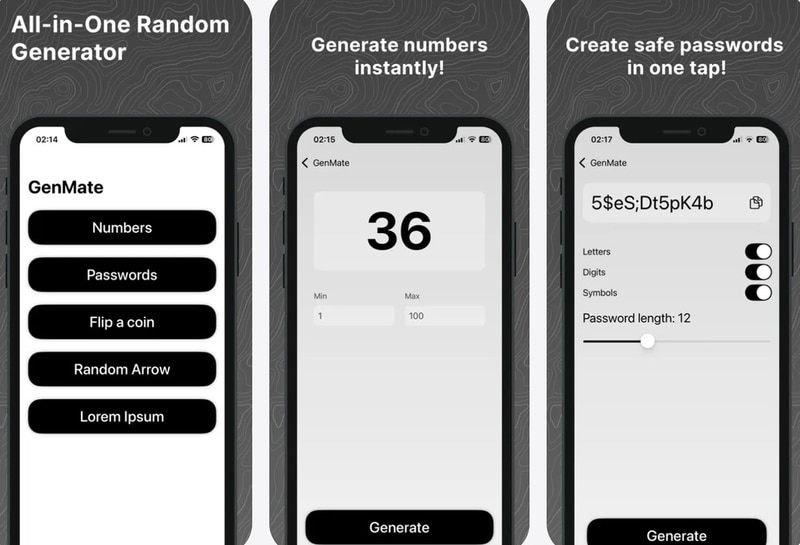
GenMate: Random Tools is a utility application that provides a collection of randomness-based functions for everyday use. It includes features such as coin flipping, password generation, and other random output tools designed to assist with decision-making and security-related tasks.
The platform consolidates multiple small utilities into a single interface, allowing users to quickly access randomization functions without additional setup or external tools. It is typically used for lightweight decision support, basic cryptographic password creation, and casual probability-based interactions. The application is structured to prioritize speed and simplicity, offering immediate results without advertisements or complex navigation. GenMate reflects a broader category of utility apps that focus on small, task-specific functions rather than comprehensive software suites. Its primary purpose is to provide fast, accessible randomness tools that support both practical and casual use cases in digital environments.
Image Credit: GenMate
Key Themes Behind This Trend
- Consolidated Micro-utilities
- A single-pane app model that aggregates many lightweight tools signals potential to replace scattered niche utilities with unified, low-friction microservices.
- Privacy-centric Password Tools
- Local, ad-free password generation and ephemeral key outputs point to new consumer expectations for privacy-first credential helpers.
- Instant Decision Automation
- Ultra-fast randomness and decision-support functions embedded directly in workflows indicate opportunities to embed algorithmic choice aids across everyday processes.
Where This Applies
- Consumer Mobile Apps
- Streamlined, single-purpose utilities that prioritize speed and simplicity could shift user preference toward minimalist apps over feature-heavy suites.
- Cybersecurity and Password Management
- Lightweight, on-device random generators reveal pathways for new low-complexity tools to augment or decentralize traditional password managers.
- Internet of Things Edge Software
- Embedding simple randomness and decision utilities at the edge suggests disruption potential in autonomous device decision-making and local privacy-preserving features.