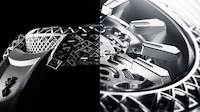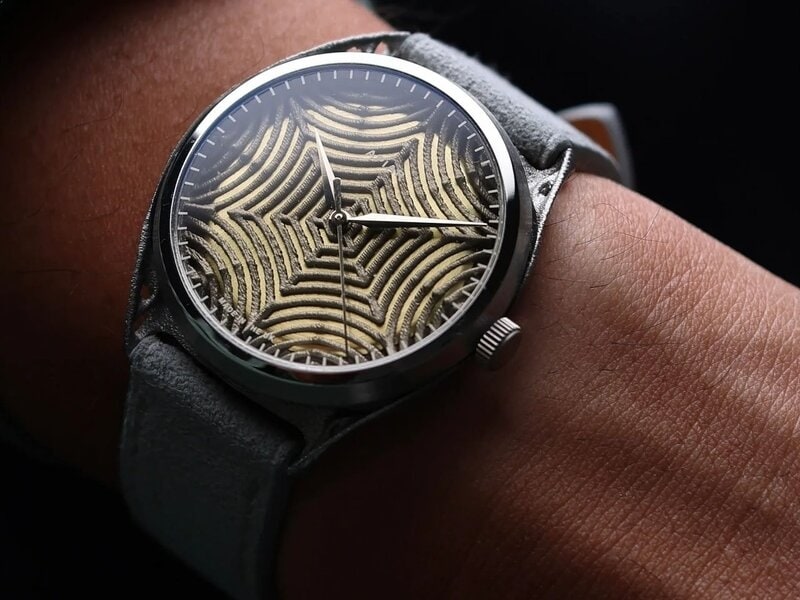
The Apiar Gen 1.0 showcases how additive manufacturing can reshape traditional horology. Crafted with laser powder bed fusion, the watch integrates the dial, mid-case, and lugs into a single, 3D-printed titanium structure enhanced by a skeletonized web-like texture. Only the bezel is CNC-machined, while the rest is built layer by layer from grade 23 titanium, resulting in a featherlight yet durable timepiece. This construction highlights the technical artistry behind the design while keeping weight and strength in balance.
Available in two finishes, Dawn offers a brushed gold tone that highlights the ridged texture, while Dusk presents a muted blue-grey reminiscent of engineering blueprints. Both feature a La Joux-Perret automatic movement with a 68-hour power reserve. With a 39 mm case that feels both wearable and refined, the Apiar Gen 1.0 blends futuristic form with functional precision while remaining proudly British-made.
Image Credit: Apiar
What's Driving This Trend
- Additive Manufacturing in Watchmaking
- Additive manufacturing allows for intricate designs and lightweight structures in watchmaking, enabling unique timepiece aesthetics.
- Integrated Watch Structures
- Combining components like dial, mid-case, and lugs into a single structure revolutionizes traditional watch design, offering streamlined and cohesive forms.
- Skeletonized Textural Design
- The use of skeletonized web-like textures in watches provides a modern aesthetic appeal and showcases the craftsmanship of timepiece design.
Who This Affects Most
- Luxury Watchmaking
- Luxury watchmaking can benefit from advanced materials and manufacturing techniques that offer unique and sustainable products.
- 3D Printing Technology
- 3D printing technology disrupts traditional manufacturing processes by allowing complex, customizable creations with minimized material waste.
- Titanium Materials Industry
- The titanium materials industry, particularly grade 23 titanium, supports innovations in lightweight yet durable product manufacturing.