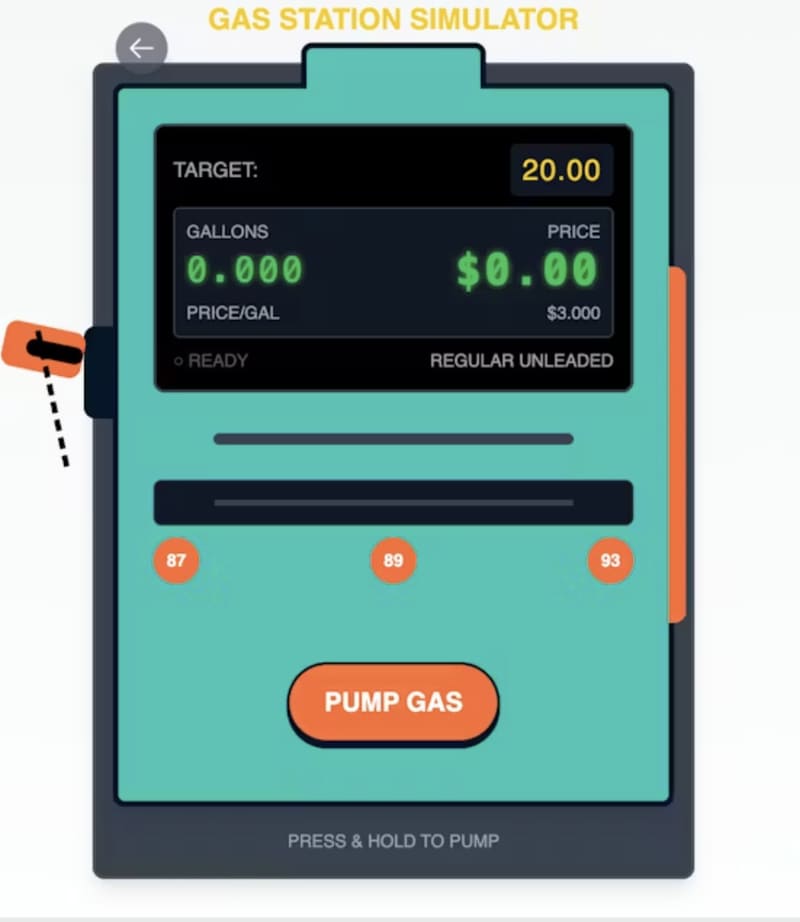
Gas Station Simulator is a web-based reflex game centred on timing and precision. The core mechanic challenges players to stop a virtual fuel pump as close as possible to a $20 target, turning a common real-world experience into a simple competitive task.
The game is designed around quick interactions, where user input timing directly determines performance and scoring outcomes. It is lightweight, browser-based, and intended for short play sessions rather than extended gameplay. According to its description, it was developed rapidly using AI-generated code, reflecting experimentation with automated development tools. The concept positions everyday routine actions as a basis for gamified interaction, encouraging repeated attempts to improve accuracy. Gas Station Simulator reflects broader trends in micro-games and casual web entertainment, where simple mechanics and relatable scenarios are used to create engaging, low-friction user experiences.
Image Credit: Gas Station Simulator
What Makes This Trend Stand Out
- Micro-gameplay Monetization
- Short, repeatable browser games create new value by embedding high-frequency engagement loops that can be monetized through microtransactions, ads, or sponsorships.
- Everyday Ritual Gamification
- Turning routine tasks into playful challenges leverages familiar contexts to boost user retention and creates avenues for branded, situationally relevant experiences.
- AI-assisted Rapid Development
- Automated code generation enables fast prototyping of lightweight interactive products, lowering the barrier for experimentation and iterative deployment.
Sectors Adopting This
- Online Casual Gaming
- Browsers and mobile platforms benefit from ultra-lightweight titles that attract large, habitual audiences through simple mechanics and competitive leaderboards.
- Automotive Retail
- Fuel retailers and convenience stores could integrate playful interfaces around routine purchases to deepen customer engagement and differentiate in a commoditized market.
- Digital Advertising
- Advertisers can utilize context-driven micro-games as attention-capturing formats that pair brand messages with high-repetition, low-friction user interactions.