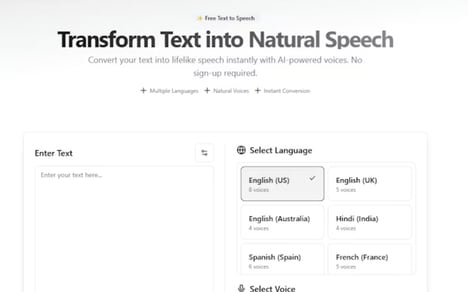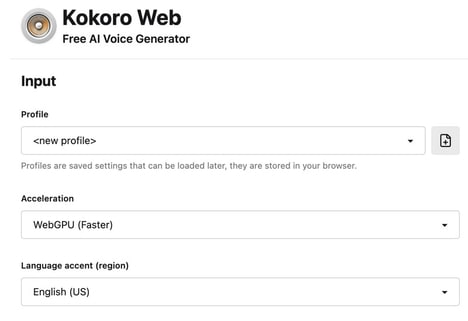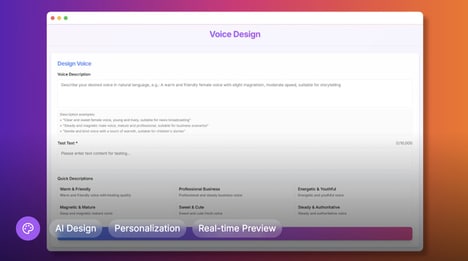
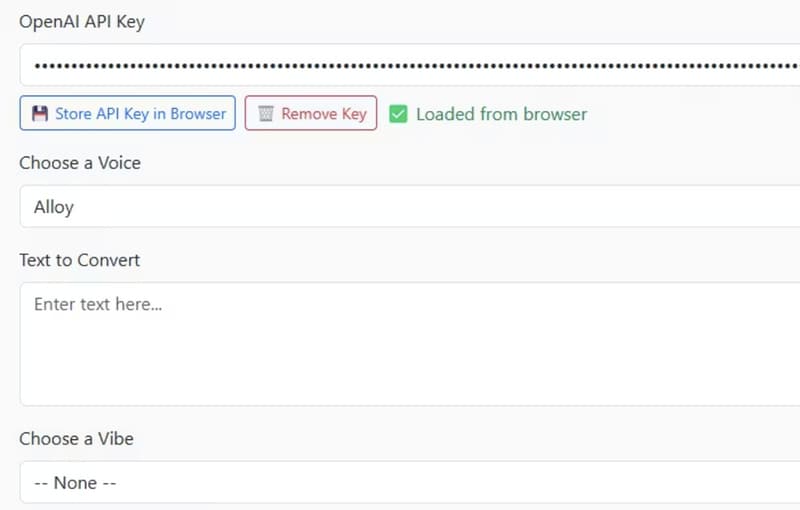
Free Text to Speech is a browser-based platform that leverages OpenAI’s language models to convert written text into audio with customizable voice and tone. Users can select different voices and stylistic “vibes” to tailor speech output for specific purposes, such as presentations, podcasts, or digital content.
The platform emphasizes speed, security, and accessibility by operating entirely in the browser without additional software requirements. From a business perspective, tools like Free Text to Speech reflect the increasing demand for automated, high-quality audio content that can streamline content creation workflows and enhance accessibility. By reducing the time and technical expertise required to produce professional speech recordings, the service enables individuals and organizations to repurpose written content into audio formats efficiently, supporting engagement, inclusivity, and multimedia communication strategies.
Image Credit: Free Text to Speech
What's Driving This Trend
- Browser-based AI Audio
- A shift toward fully in-browser AI speech tools reduces deployment friction and enables instant audio generation without local software installs, opening space for lightweight enterprise integrations and scalable enterprise licensing models.
- Customizable Voice Personas
- Highly configurable voices and stylistic 'vibes' allow brands and creators to establish consistent auditory identities, creating potential for proprietary voice libraries and voice-as-a-service offerings.
- Accessibility-first Content
- Automated text-to-speech that prioritizes speed and ease of use broadens access to multimedia for diverse audiences, presenting opportunities for compliance-focused platforms and inclusive content monetization.
Who This Affects Most
- E-learning and Edtech
- On-demand AI narration for lessons and assessments has the potential to personalize learning experiences and scale multilingual course delivery across institutions and corporate training programs.
- Podcasting and Media Production
- Synthetic hosts and rapid episode generation enable high-volume content pipelines and new formats where human and AI voices are blended for serialized storytelling and advertising insertion.
- Healthcare and Assistive Technologies
- Natural-sounding, customizable speech synthesis can improve patient communication tools and assistive devices, enhancing clarity and user comfort in clinical and at-home care settings.