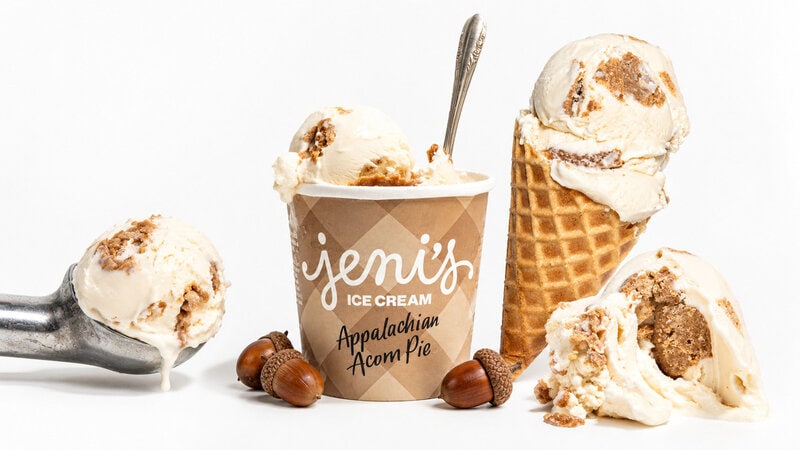
Jeni's Ice Creams has introduced foraged acorn ice creams with Appalachian Acorn Pie, a limited-edition dessert featuring flour made from Ohio oak acorns. The unusual ingredient delivers a sweet, nutty profile reminiscent of hazelnuts, coconut, and chestnuts, offering customers a distinctive alternative to conventional fall flavors.
Developed over five years, the recipe required Jeni's to establish its own ingredient supply chain. The company partnered with Ohio's Route 9 Action Network to collect and prepare acorns, including removing naturally occurring tannins before consumption. A nearby Amish farm then milled the processed acorns into flour, which Jeni's incorporated into ice cream alongside a graham cracker swirl.
For Jeni's, the release demonstrates how regional agricultural partnerships can support specialized product development. The limited availability also creates a distinctive seasonal offering, while the collaboration provides opportunities for local producers to diversify their agricultural activities.
Image Credit: Jeni's Splendid Ice Creams
What's Driving This Trend
- Foraged Dessert Ingredients
- Wild-harvested inputs such as acorns introduce distinctive flavor profiles that can differentiate seasonal desserts beyond conventional pumpkin, apple, and spice offerings.
- Regional Supply Chains
- Localized sourcing partnerships create room for specialty food brands to build proprietary ingredients with stronger provenance and community value.
- Limited-edition Flavor Craft
- Scarcity-driven releases turn unusual ingredients into premium experiences that can deepen consumer curiosity and brand loyalty.
Who This Affects Most
- Artisanal Ice Cream
- Premium frozen dessert makers can use unconventional regional ingredients to expand flavor innovation and reinforce craft positioning.
- Specialty Agriculture
- Small-scale producers and community networks gain new revenue pathways when overlooked crops and foraged materials become commercial food inputs.
- Food Processing
- Ingredient preparation services such as tannin removal and specialty milling become more valuable as brands experiment with nontraditional plant-based flours.