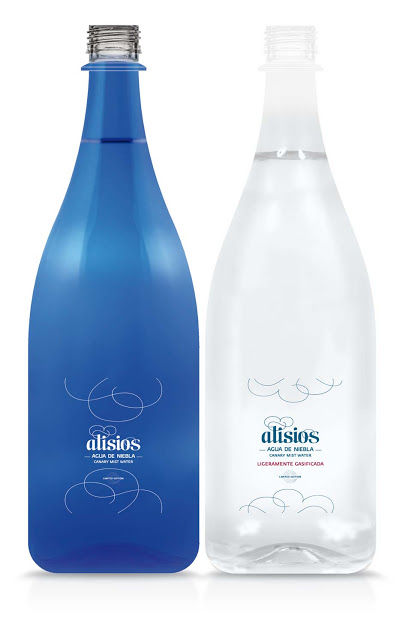
Alisios' Canary Mist Fog Water is collected by "trapping" clouds high above the Canary Islands and pulling potable water from them in a fresh and sustainable way.
Although it seems like an elaborate and extensive project to go out and collect water from clouds, it's an ecological endeavor since there is no energy that is needed to collect this drinkable water, nor does any waste come from the process. Since the water is collected from a high level, gravity does most of the work at bringing the water back to ground level, so no pumping systems are required. Alisios calls its collection stations 'Hydric Gardens,' which double as emergency reserves if a drought or a fire should occur.
In keeping with the cloudy concept, the design of the Canary Mist Fog Water bottles highlight purity and clarity.
Why This Trend Is Growing
- Cloud Harvesting
- There is an opportunity to develop cloud harvesting technology for more widespread access to sustainable water sources.
- Eco-friendly Water Sourcing
- There is an opportunity for companies to explore and promote sustainable and eco-friendly water sourcing methods, such as cloud harvesting.
- Alternative Water Sources
- There is an opportunity to invest in researching and developing alternative water sources, such as cloud harvesting, to address water scarcity issues.
Industries Being Reshaped
- Water Conservation
- The water conservation industry could explore cloud harvesting technology to offer additional sustainable solutions to water scarcity issues.
- Bottled Water
- The bottled water industry could invest in sustainable and eco-friendly water sourcing methods, such as cloud harvesting, to differentiate themselves and appeal to environmentally conscious consumers.
- Emergency Management
- The emergency management industry could explore utilizing cloud-sourced water collection points as emergency reserves during drought or fire situations.