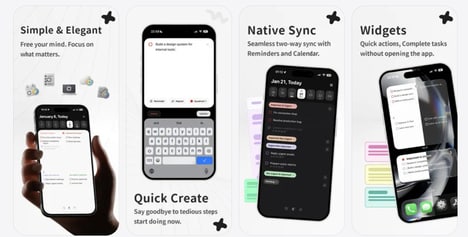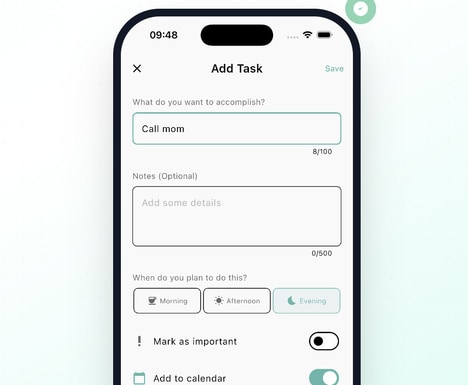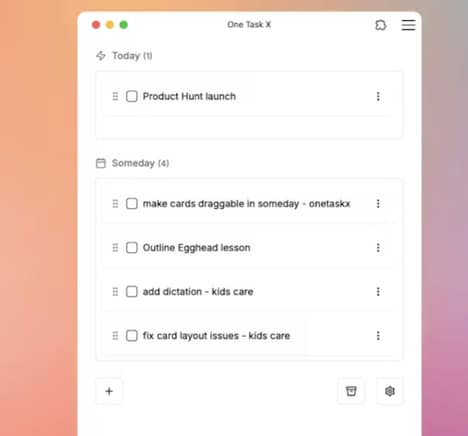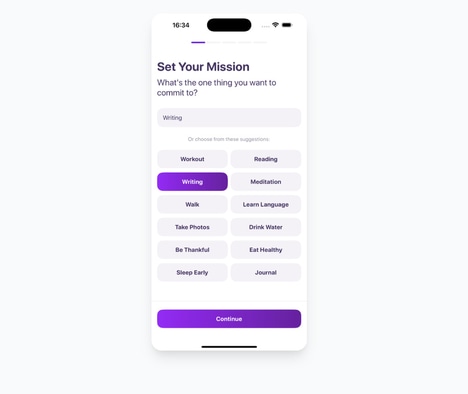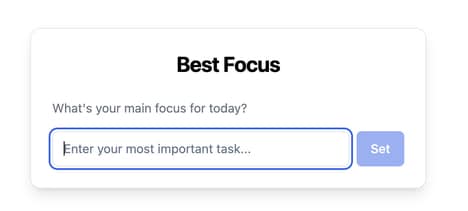
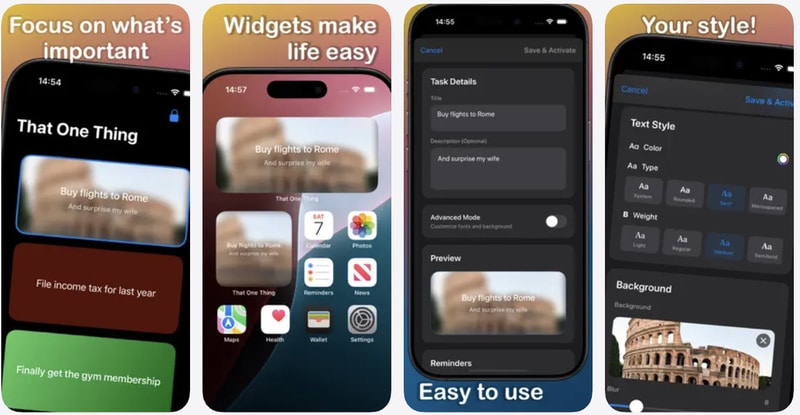
Productivity tools often encourage users to manage growing collections of tasks, projects, and reminders -- Focus Task: That One Thing takes the opposite approach by reducing attention to a single meaningful objective for the day. Instead of presenting long to-do lists, the app asks users to identify one task worth focusing on. That decision becomes the anchor for the day, creating a simpler framework for prioritization and execution.
Widgets and reminders keep the chosen task visible throughout the day, while lightweight customization options allow the experience to remain personal without becoming distracting. The emphasis stays on maintaining clarity rather than adding layers of planning.
The philosophy behind the app is that productivity does not always come from doing more. By narrowing attention to one commitment at a time, Focus Task: That One Thing is designed for people who prefer intentional progress over managing increasingly complex task systems.
Image Credit: Focus Task:
Key Themes Behind This Trend
- Single-task Productivity
- A growing preference for one-priority workflows creates space for tools that measure meaningful progress instead of rewarding task volume.
- Minimalist Planning Interfaces
- Simplified app experiences are reshaping productivity expectations by replacing feature-heavy dashboards with calm, decision-light design.
- Attention-anchored Reminders
- Persistent visual cues across widgets and notifications introduce new ways for software to support focus without expanding cognitive load.
Where This Applies
- Productivity Software
- Task management platforms face disruption from lightweight systems that prioritize clarity, restraint, and daily intention over comprehensive project tracking.
- Digital Wellness
- Focus-centered applications align with demand for healthier technology habits by framing productivity as reduced distraction rather than increased output.
- Workplace Technology
- Enterprise tools have an opportunity to evolve around priority alignment and attention management as teams seek alternatives to overwhelming workflow systems.