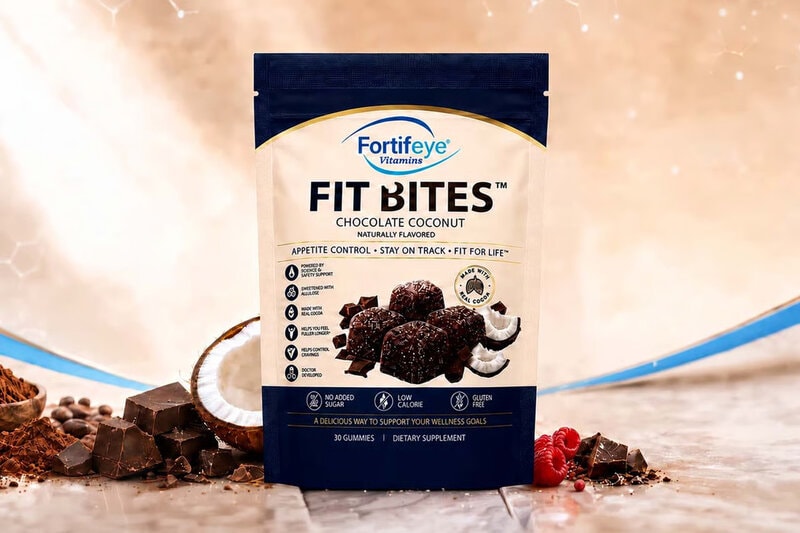
Fortifeye Fit Bites have been developed as a product that takes aim at the supplement market with a functional recipe that will help consumers to maintain their daily dietary preferences. The product features a chocolate coconut flavor that doesn't have a high-protein recipe or bar-style composition, but instead boasts a gummy composition that will effectively curb cravings for higher calorie foods and sweets.
Each two-gummy serving has 20-calories, five-grams of carbs, two-grams fiber, 300mg of red Dutch-processed cocoa and 300mg of Slendesta. The final ingredient, Slendesta, is the product's secret weapon that's backed by clinical studies to help support the body's satiety signals as well as feelings of fullness after a meal to reduce the urge to overeat.
Fortifeye Fit Bites are sweetened with allulose that works with the cocoa to deliver a sweet chocolate flavor that will also satisfy on a taste level to cover multiple senses.
Key Themes Behind This Trend
- Satiety Gummies
- Functional gummies with clinically backed appetite-control ingredients create room for supplement brands to move beyond pills, powders and bars into more snack-like formats.
- Low-calorie Indulgence
- Chocolate-forward formulations using allulose and cocoa point to a growing market for products that satisfy sweet cravings while supporting calorie-conscious routines.
- Fiber-enhanced Snacking
- Small-format snacks that combine fiber with fullness-supporting compounds reflect demand for convenient products positioned between confectionery and weight management supplements.
Where This Applies
- Dietary Supplements
- The supplement sector is being reshaped by enjoyable delivery systems that make functional ingredients feel more like everyday treats than traditional wellness products.
- Functional Confectionery
- Candy-inspired formats with health-oriented benefits offer manufacturers a path to differentiate in indulgent categories without relying on conventional high-sugar recipes.
- Weight Management
- Appetite-control products built around satiety signaling and portion-friendly servings suggest new possibilities for accessible, sensory-driven support in dieting and wellness programs.