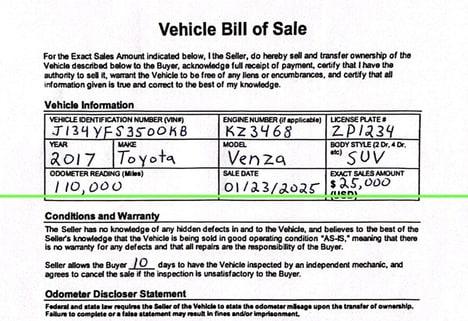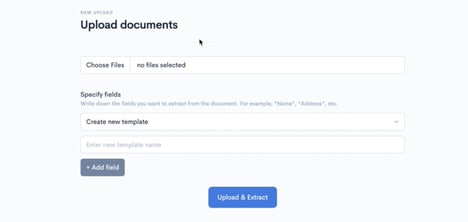
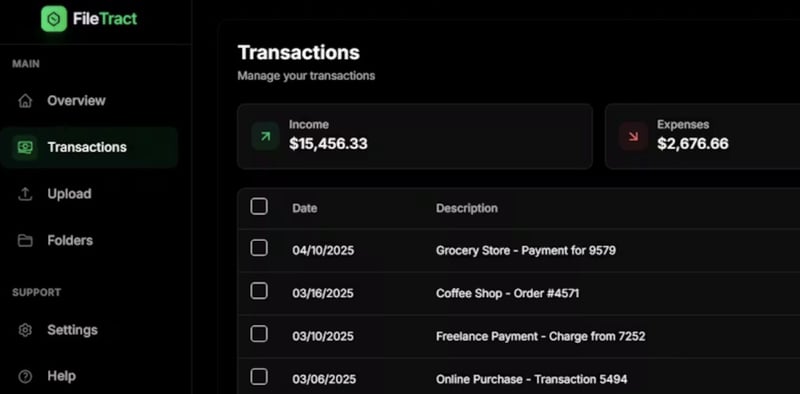
FileTract is a B2B software solution designed to streamline data extraction from bills, invoices, and transactional documents using artificial intelligence. The platform identifies and extracts relevant information, such as payment details, vendor names, and amounts, and automatically assigns the data to user-defined folders or workflows.
By automating this process, FileTract reduces manual data entry, minimizes errors, and accelerates back-office operations. From a business perspective, solutions like FileTract can enhance operational efficiency, improve document management, and provide a scalable method for handling growing volumes of financial data. Integration with existing accounting or enterprise resource planning (ERP) systems further positions the tool as a practical addition to corporate data workflows. Overall, FileTract reflects the increasing adoption of AI-powered automation in financial operations and administrative process optimization.
Image Credit: FileTract
What Makes This Trend Stand Out
- AI-powered Document Automation
- Advanced machine learning models are transforming manual document handling by enabling high-accuracy extraction of structured and semi-structured financial data at scale.
- Contextual Folder Organization
- Automated classification that maps extracted metadata to dynamic folder structures reduces retrieval times and creates new paradigms for record lifecycle management.
- Seamless ERP Integration
- Native connectors and standardized data schemas are reducing friction between front-line document ingestion and core accounting systems, altering traditional ERP data pipelines.
Sectors Adopting This
- Financial Services
- Banks and payment processors face opportunities to streamline reconciliation and fraud detection through real-time extraction of invoice and transaction data.
- Accounting and Bookkeeping
- Bookkeeping firms and corporate AP departments can significantly lower error rates and processing times by leveraging automated capture and tagging of payable documents.
- Enterprise Software
- ERP and workflow platform vendors may be reshaped by embedded AI modules that convert unstructured document streams into ready-to-use business records.