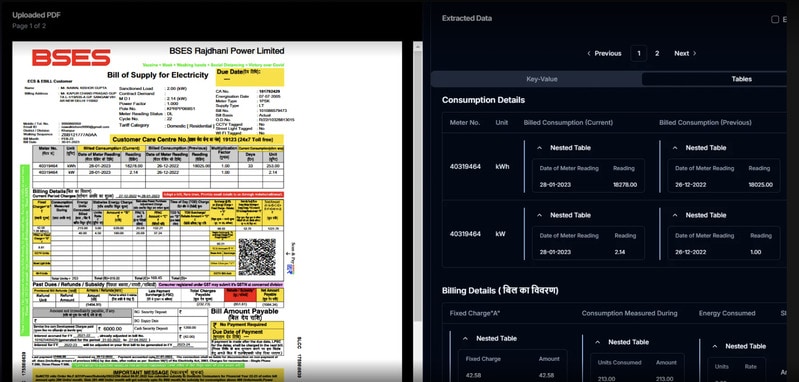
Scour AI is a document processing tool designed to convert unstructured information into usable, structured data. It supports PDFs, scanned files, and handwritten documents, extracting elements such as key-value pairs and tables with minimal manual input. The output can be exported into common formats including CSV, Excel, and JSON, making it compatible with analytics, reporting, and downstream systems.
For businesses and operations teams, Scour AI addresses a common bottleneck in data workflows: time spent manually re-entering or cleaning document data. Developers can also integrate its outputs into automated pipelines, reducing friction between document intake and system readiness. By focusing on speed and format flexibility, Scour AI fits into environments where accuracy, scalability, and fast turnaround are essential, particularly in finance, logistics, and administrative operations.
Image Credit: Scour AI
Key Themes Behind This Trend
- Automated Document-to-data Conversion
- Rapid extraction of structured fields from diverse document types enables near-instant availability of previously siloed business intelligence for analytics and decision systems.
- Handwritten Text Recognition at Scale
- Improved accuracy on handwritten and scanned inputs opens new possibilities for digitizing legacy forms and unlocking historical records for machine processing.
- Real-time Document Pipeline Integration
- Seamless export to CSV, Excel, and JSON supports immediate ingestion into downstream workflows, reducing latency between document receipt and operational use.
Where This Applies
- Financial Services
- High-volume statement and contract processing benefits from faster reconciliation and enhanced risk modeling when structured data is produced automatically.
- Logistics and Supply Chain
- Automated capture of bills of lading, invoices, and pickup receipts can streamline tracking, billing accuracy, and exception handling across networks.
- Healthcare Administration
- Extraction of patient intake forms, prescriptions, and insurance documents into standardized formats can improve claims processing and record interoperability.