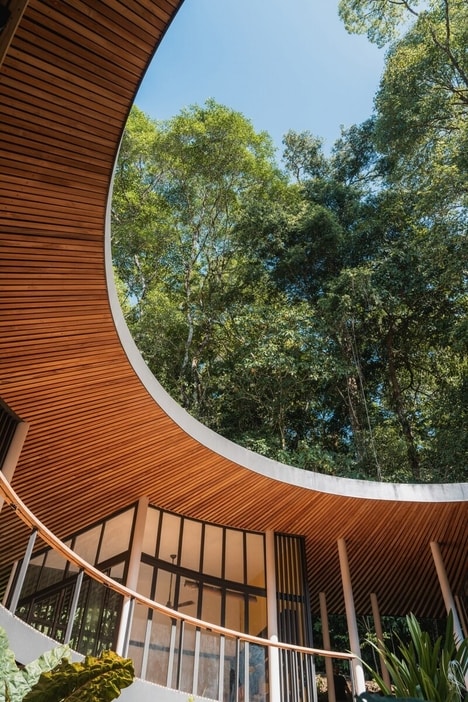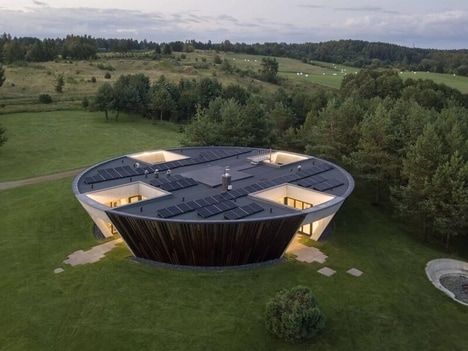
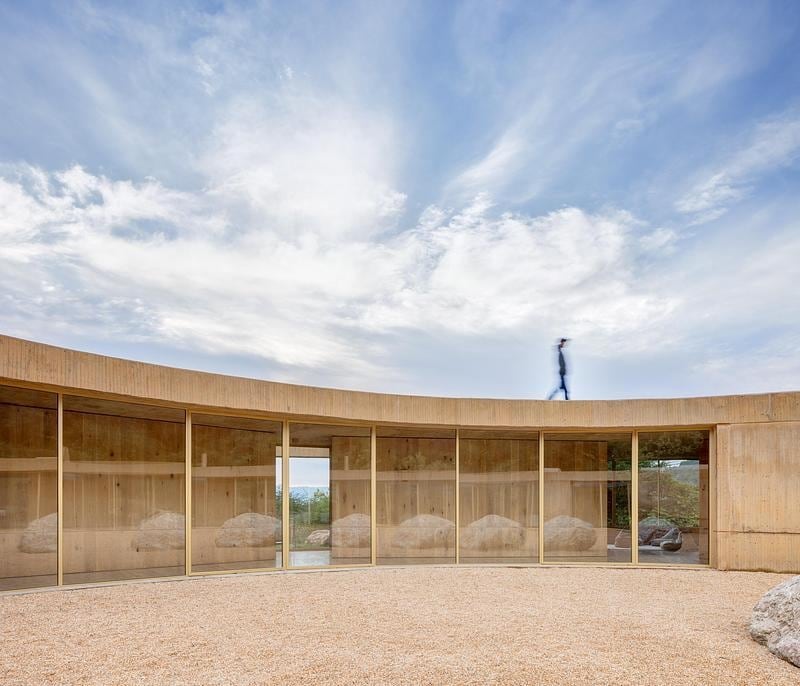
House 720 Degrees, a residential project designed by Mexico City-based architect Fernanda Canales in Valle de Bravo, Mexico, is a geometric and optical device conceived as a solar clock that registers the passing of time.
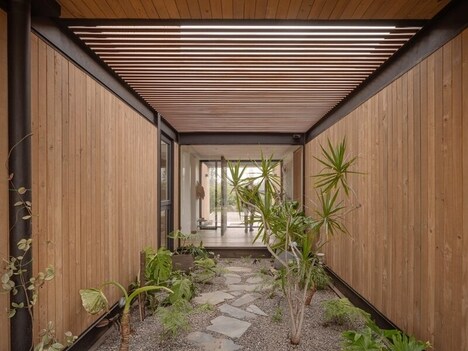
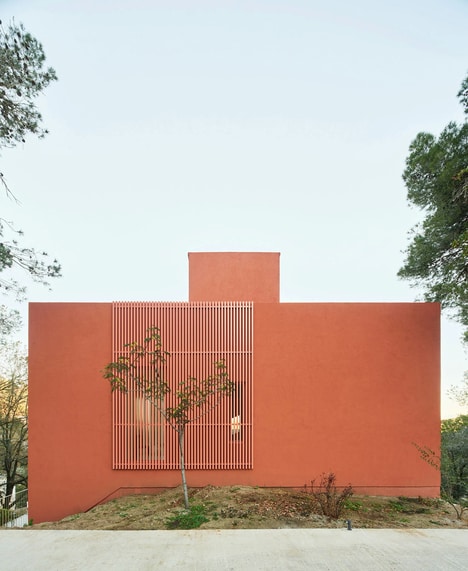
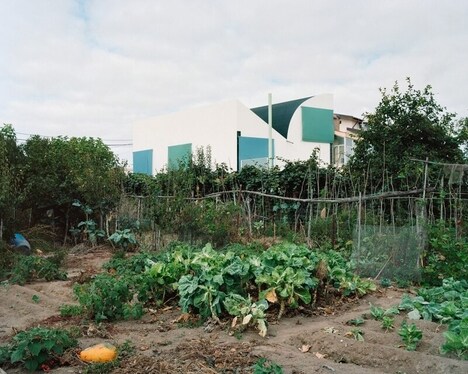
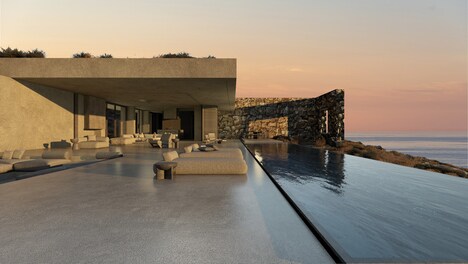
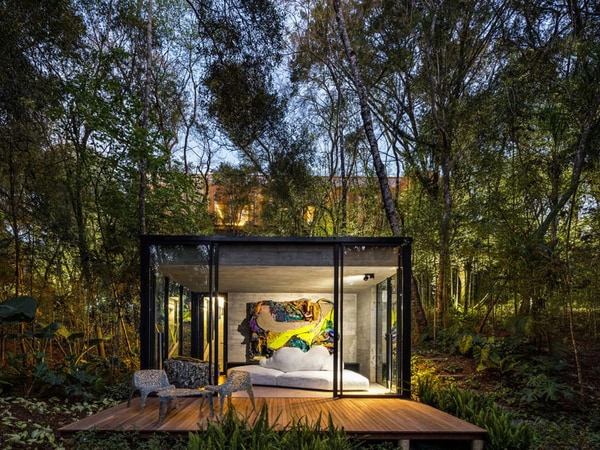
The House 720 Degrees project features a circular plan that doubles the 360-degree track of normal vision by opening toward varied mountain and volcano views along the external perimeter during the day and turning inward around a central courtyard at night. The off-the-grid house comprises three separate volumes — a main circular dwelling, a detached studio and guest room, and a rectangular volume with additional bedrooms and services. It is designed to accommodate two families while preserving existing vegetation and responding to the accentuated topography.
Constructed using local soil mixed with concrete to achieve a natural finish that echoes the landscape, the house harvests rainwater, generates its own electricity through solar panels, incorporates hydronic radiant floors, and benefits from natural cross-ventilation.
Image Credit: Rafael Gamo
Why This Trend Is Growing
- Solar-integrated Architecture
- Buildings that function as timekeeping devices and orientable envelopes enable new typologies of façades and rooftop systems that blend photovoltaics with experiential design.
- Earth-material Construction
- Local soil-concrete composites and natural finishes point toward low-carbon, site-specific material systems that redefine thermal mass and aesthetic integration with landscapes.
- Circadian Spatial Programming
- Designs that reconfigure visual and environmental exposure over a day create opportunities for dynamic living spaces tuned to light, temperature, and human rhythms.
Industries Being Reshaped
- Residential Development
- Market demand for off-grid, multi-family dwellings that preserve terrain suggests novel product lines combining modularity with landscape-sensitive planning.
- Sustainable Construction Materials
- Manufacturers of soil-based composites and low-embodied-energy binders could disrupt supply chains by offering locally sourced, performance-tested alternatives to conventional concrete.
- Renewable Energy Systems
- Integrated solar and hydronic systems tailored to building geometry indicate potential for bespoke energy-management platforms that optimize generation, storage, and thermal comfort.