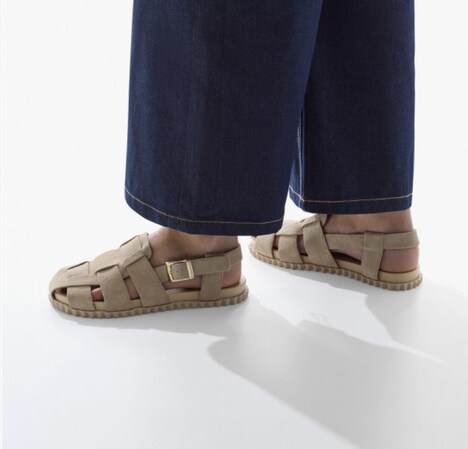


Former DJ turned fashion designer Mandy Coon teamed up with bespoke Australian cult shoe label Shoes of Prey for her New York Fashion Week Spring/Summer 2013 collection. This red, white and black series appears ultra modern and features exotic fish skin, as an eco-friendly alternative.
First of all, it doesn't smell like fish and secondly, until very recently, fish skin has been seen as bio-waste in the fishing industry, although it holds ancient roots in Nordic and Native communities, and has now found a new use. With an element of applied design and her graphic vision, Coon creates metallic-edged fish skin sandals, toe-capped wedges, and sharp stilettos, while it takes on similar characteristics to python and other reptile skins at a first glance.
What Makes This Trend Stand Out
- Eco-friendly Fashion
- Using unconventional materials like fish skin as an eco-friendly alternative in fashion design.
- Upcycling
- Turning bio-waste materials, like fish skin, into fashionable and valuable products.
- Exotic Materials
- Exploring the use of unconventional materials, such as fish skin, in high fashion design.
Sectors Adopting This
- Fashion Industry
- The fashion industry can explore the use of unconventional materials like fish skin in their designs as a sustainable and fashionable alternative to traditional materials.
- Fishing Industry
- The fishing industry can potentially create new revenue streams by selling their underutilized bio-waste materials like fish skin to fashion designers and brands.
- Luxury Goods Industry
- The luxury goods industry can incorporate unconventional materials like fish skin into their products to appeal to eco-conscious consumers who seek unique and sustainable products.