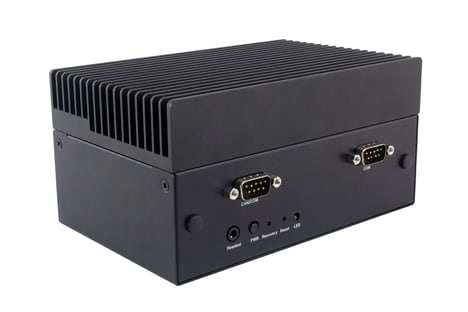
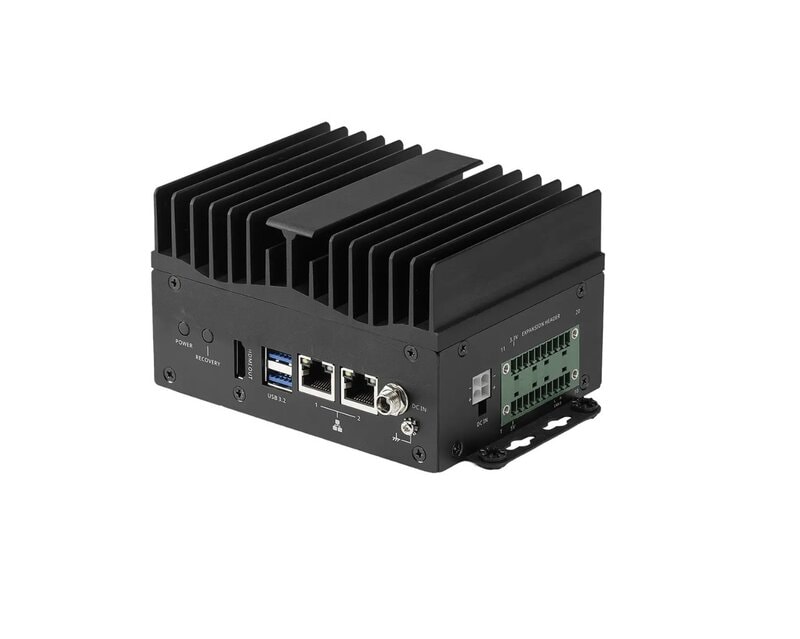
MSI’s MS-C9ZA is a compact, fanless industrial mini PC built on Nvidia’s Jetson Orin Nano platform. It features a six-core ARM processor with Cortex-A78 AE cores and 4 MB of L3 cache, along with 8 GB of LPDDR5 RAM running at 3,200 MT/s. Its Ampere-based integrated GPU includes 1,024 CUDA cores and 32 tensor cores and is rated for up to 67 TOPS of INT8 AI performance.
The 126 x 96 x 74 mm chassis uses a large heatsink for passive cooling and weighs about 1 kg. Connectivity includes dual USB 3.2 Gen 2 Type-A ports, USB 2.0 Type-C, HDMI, dual gigabit Ethernet, GPIO, I2C, UART and CAN interfaces. A 256 GB SSD occupies an upgradeable M.2 2280 slot, while an additional M.2 2230 slot supports expansion, including an optional 5G daughterboard.
The system targets machine vision, factory automation and robotics control. It reflects the movement of AI inference closer to industrial equipment, giving MSI a purpose-built edge computing product for deployments where quiet operation, compact dimensions and broad connectivity matter. Pricing and availability remain unannounced.
Image Credit: MSI
Key Themes Behind This Trend
- Fanless Edge AI
- Compact passive-cooled computing systems are enabling reliable AI inference in dust-prone, noise-sensitive, and space-constrained industrial environments.
- Industrial Vision Automation
- Machine vision workloads are shifting toward embedded platforms with onboard AI acceleration, reducing latency for inspection, tracking, and quality control applications.
- Modular Connectivity Expansion
- Upgradeable storage, wireless modules, and industrial I/O interfaces create flexible deployment models for factories integrating robotics, sensors, and remote monitoring.
Where This Applies
- Industrial Computing
- Rugged mini PCs with dedicated AI performance are reshaping embedded hardware markets for automation-heavy environments that require durability and low maintenance.
- Factory Automation
- Localized inference hardware supports faster equipment decisions, predictive maintenance, and adaptive production workflows without constant reliance on cloud infrastructure.
- Robotics
- Edge-ready processors with GPU and tensor acceleration provide robotics developers with compact control platforms for navigation, perception, and real-time task execution.