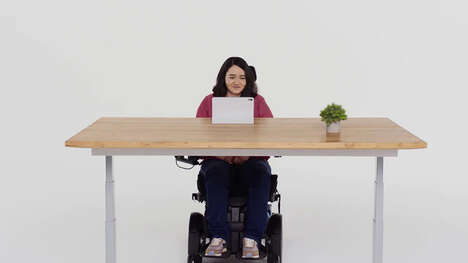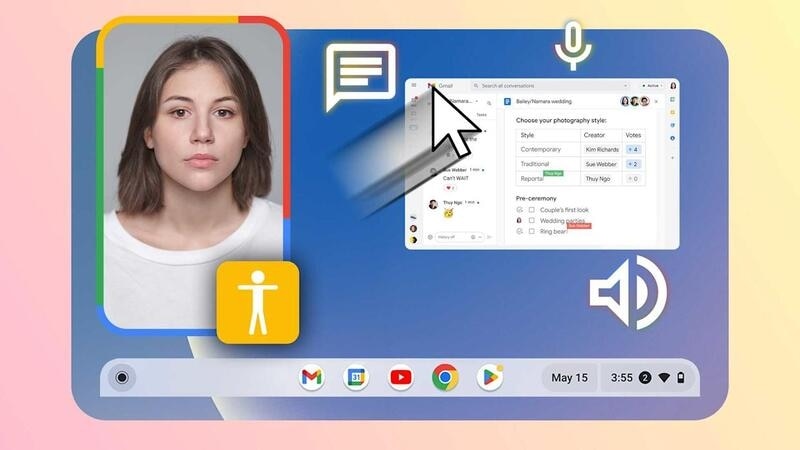
Google has introduced an innovative facial gesture control system for Chromebooks. Considered to be a significant advancement in accessible computing technology, the Face Control feature utilizes advanced AI and a 478-point facial mapping system to translate head movements and expressions into precise cursor control and interface navigation.
Google's facial gesture control system offers a hands-free operation method that requires only a functional webcam and proper lighting. Users can also adjust the sensitivity settings of the feature, which will allow them to control actions such as cursor speed, movement thresholds, and activation gestures like smiling to initiate clicks. Since privacy is top of mind for the modern consumer, Google ensures that all facial data is processed locally and does not collect personal information.
Google's new Face Control feature is available in ChromeOS M132 and later versions.
Image Credit: Google
Key Themes Behind This Trend
- AI-driven Accessibility
- Advanced AI is being leveraged to create facial gesture controls, enhancing accessibility through intuitive interaction capabilities.
- Privacy-centric Technology
- With a focus on local data processing, facial gesture systems prioritize user privacy, aligning with growing consumer demand for secure personal data handling.
- Hands-free Interface Navigation
- The development of gesture-based controls allows for seamless hands-free device navigation, addressing the need for more inclusive technology solutions.
Where This Applies
- Assistive Technology
- The implementation of facial gesture control systems can potentially transform assistive technology by offering more personalized and adaptive user experiences.
- Consumer Electronics
- Incorporating advanced facial mapping into consumer devices presents opportunities for creating more interactive and intuitive electronic products.
- Artificial Intelligence
- AI-powered recognition systems are expanding into new realms by enabling sophisticated interpretations of user gestures in real time.