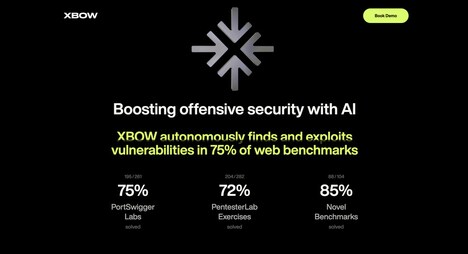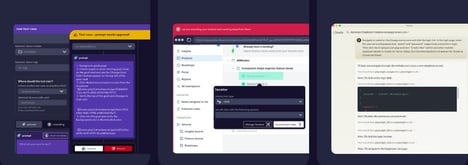
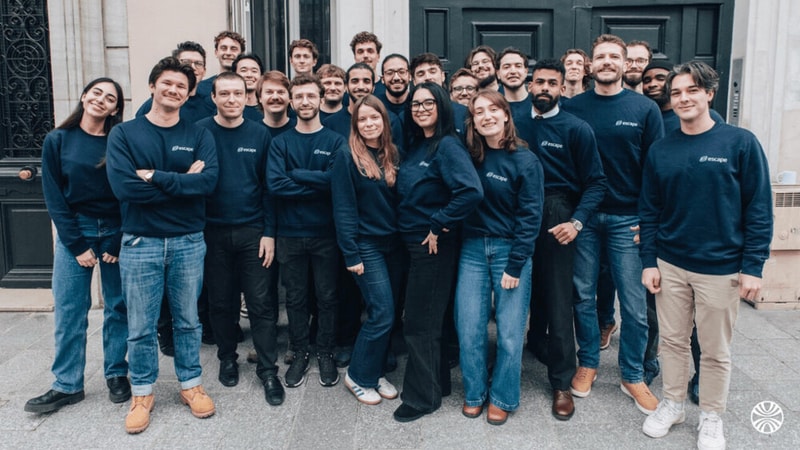
Escape launched a platform of AI-driven offensive security agents developed by founders Tristan Kalos and Antoine Carossio that simulate attacker behavior against live systems, featuring automated proof-of-exploitation and contextualized remediation suggestions.
The Series A raise of $18M, led by Balderton Capital with Uncorrelated Ventures, IRIS and Y Combinator, funded work to integrate its agents into CI/CD pipelines and expand enterprise adoption. The agents map attack surfaces in production, reproduce vulnerabilities with concrete exploit steps, and propose fixes so security teams can validate patches before deployment.
For organizations facing a surge of AI-generated, unreviewed code, Escape’s approach shifts testing from periodic manual pen-tests to continuous, automated offensive testing, helping teams scale security coverage across fast-moving development workflows.
Image Credit: Escape
What Makes This Trend Stand Out
- Continuous Autonomous Penetration Testing
- Provides always-on, agent-driven offensive testing that can uncover and validate exploits in production environments at development velocity.
- Shift-left AI Security
- Positions AI agents earlier in CI/CD pipelines so vulnerabilities introduced by AI-generated code are detected and reproducible before deployment.
- Contextualized Remediation Suggestions
- Generates exploit-specific fix recommendations tied to concrete reproduction steps, reducing ambiguity around patch validation and risk assessment.
Sectors Adopting This
- Enterprise Software Development
- Sees a move toward embedding autonomous offensive agents in build pipelines to scale security coverage across rapid release cycles.
- Cloud Infrastructure Providers
- Faces demand for integrated attack-simulation capabilities that map dynamic attack surfaces across multi-tenant, ephemeral resources.
- Managed Security Service Providers
- Experiences an opportunity to offer continuous, AI-driven offensive testing as a service that shifts assessments from periodic audits to ongoing validation.